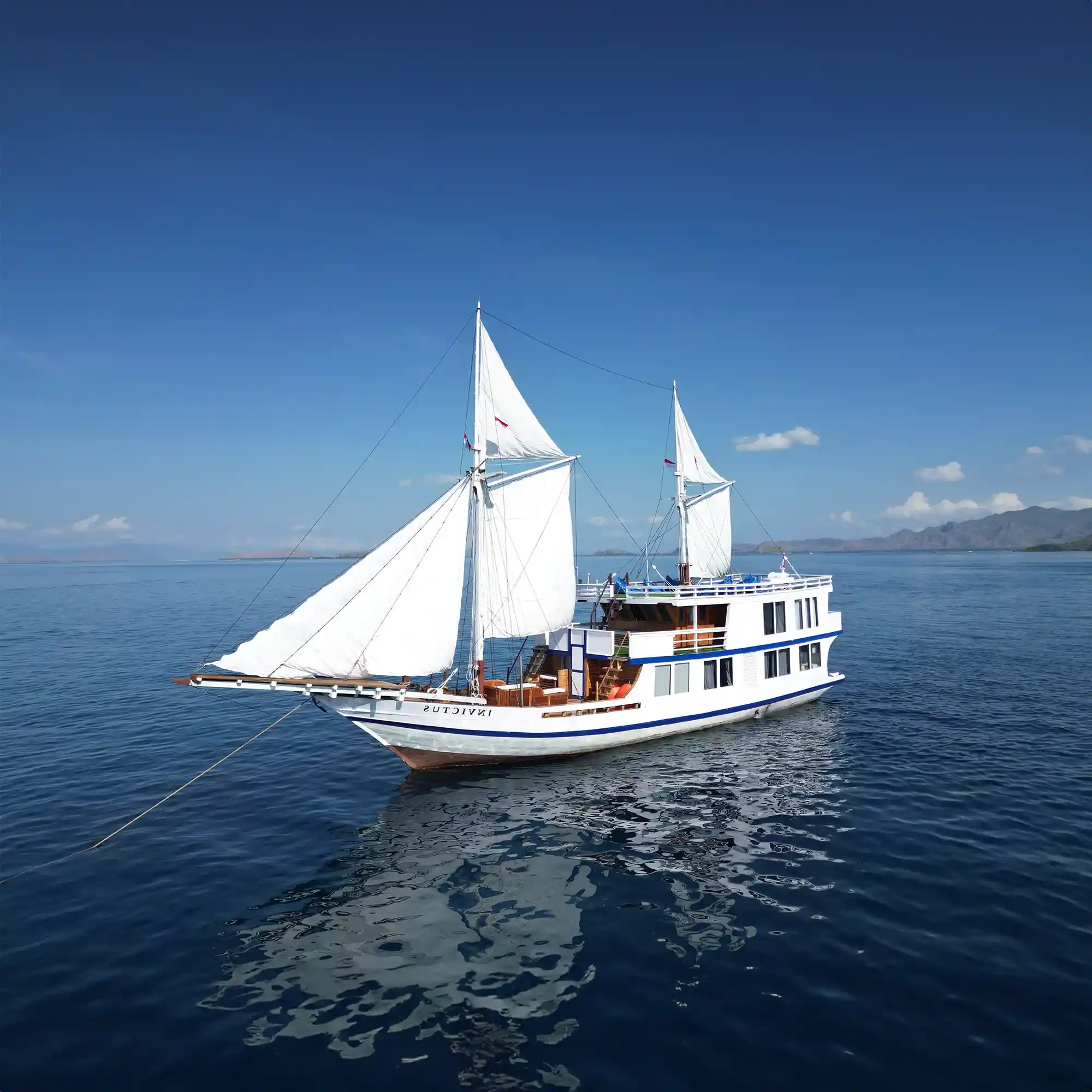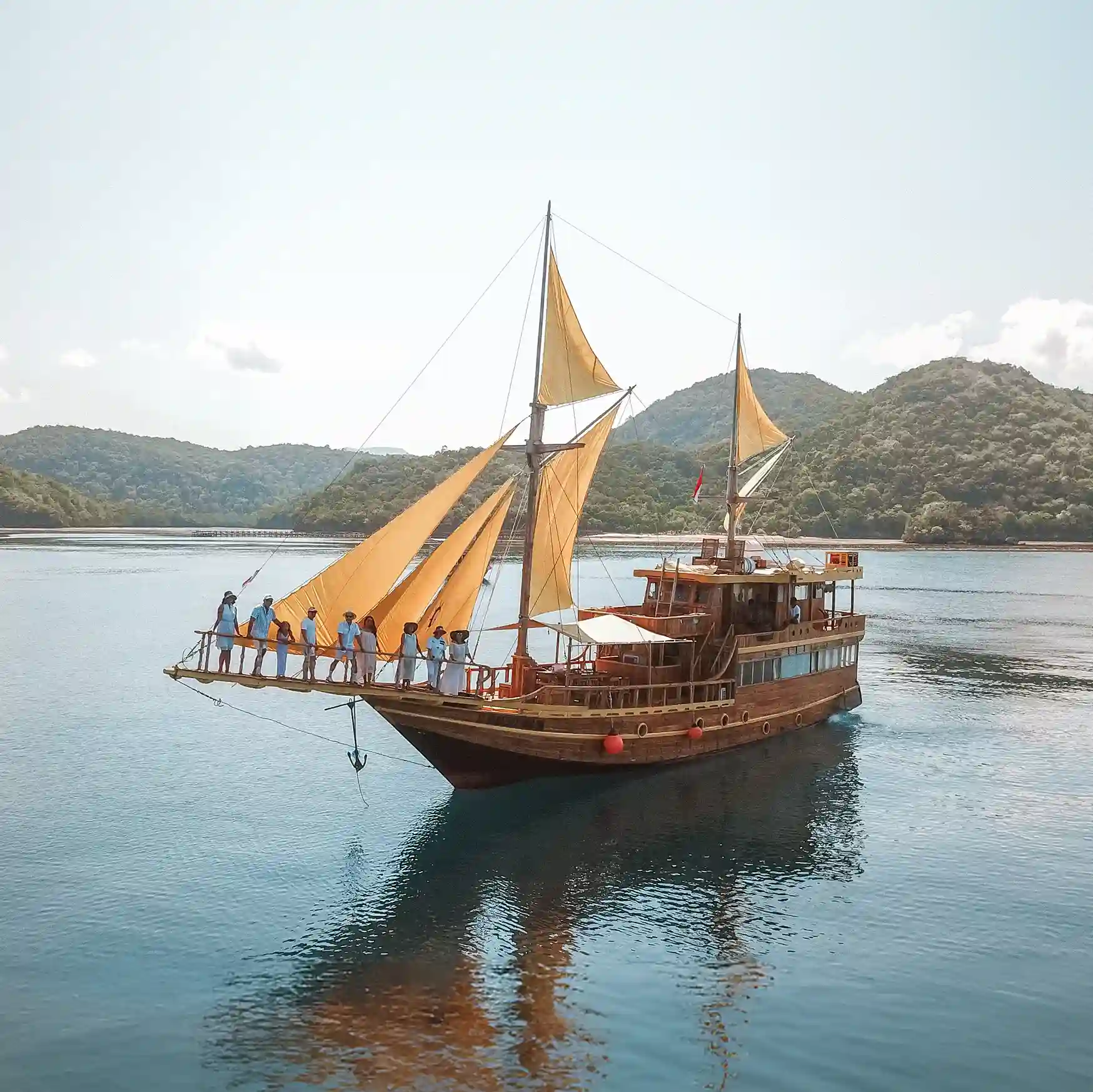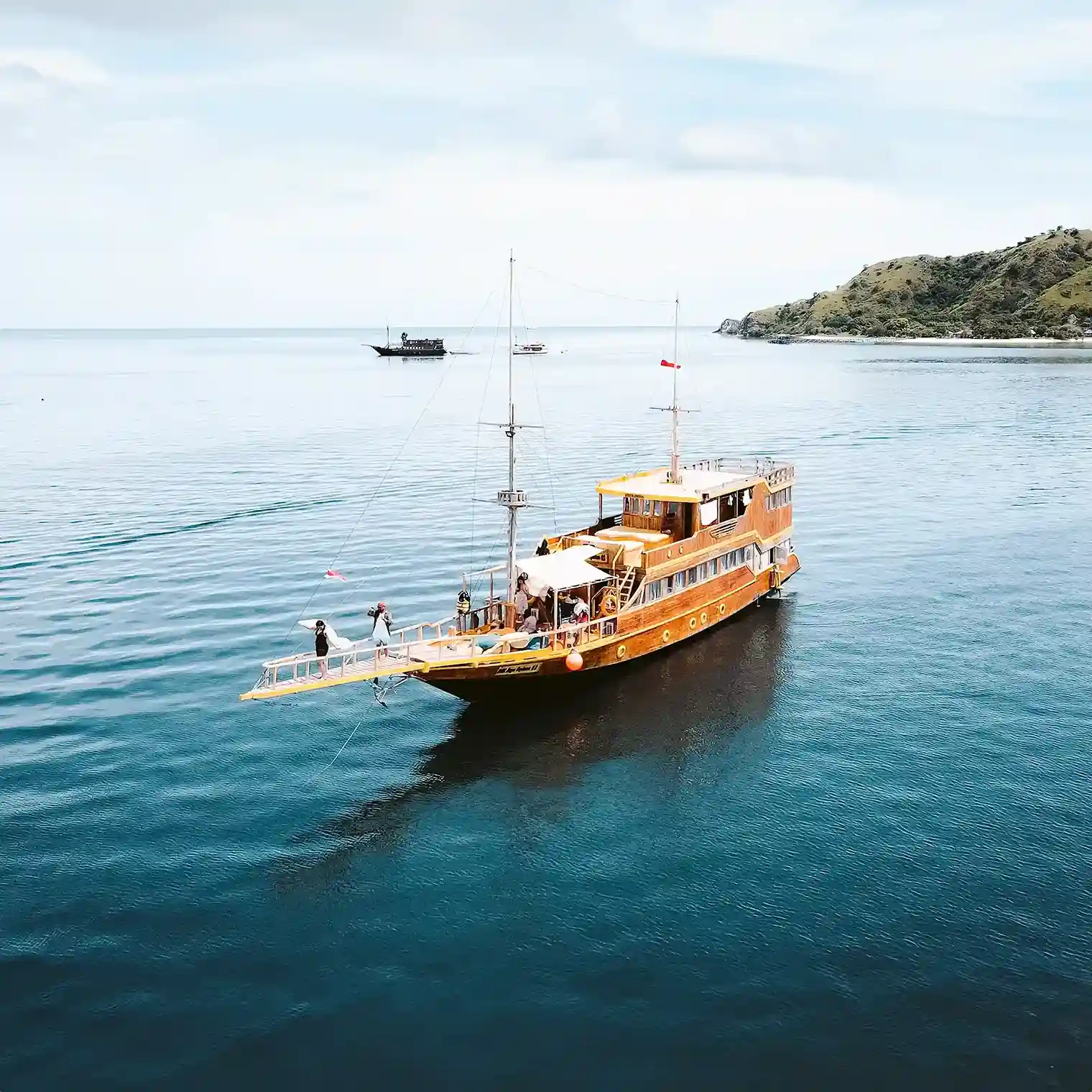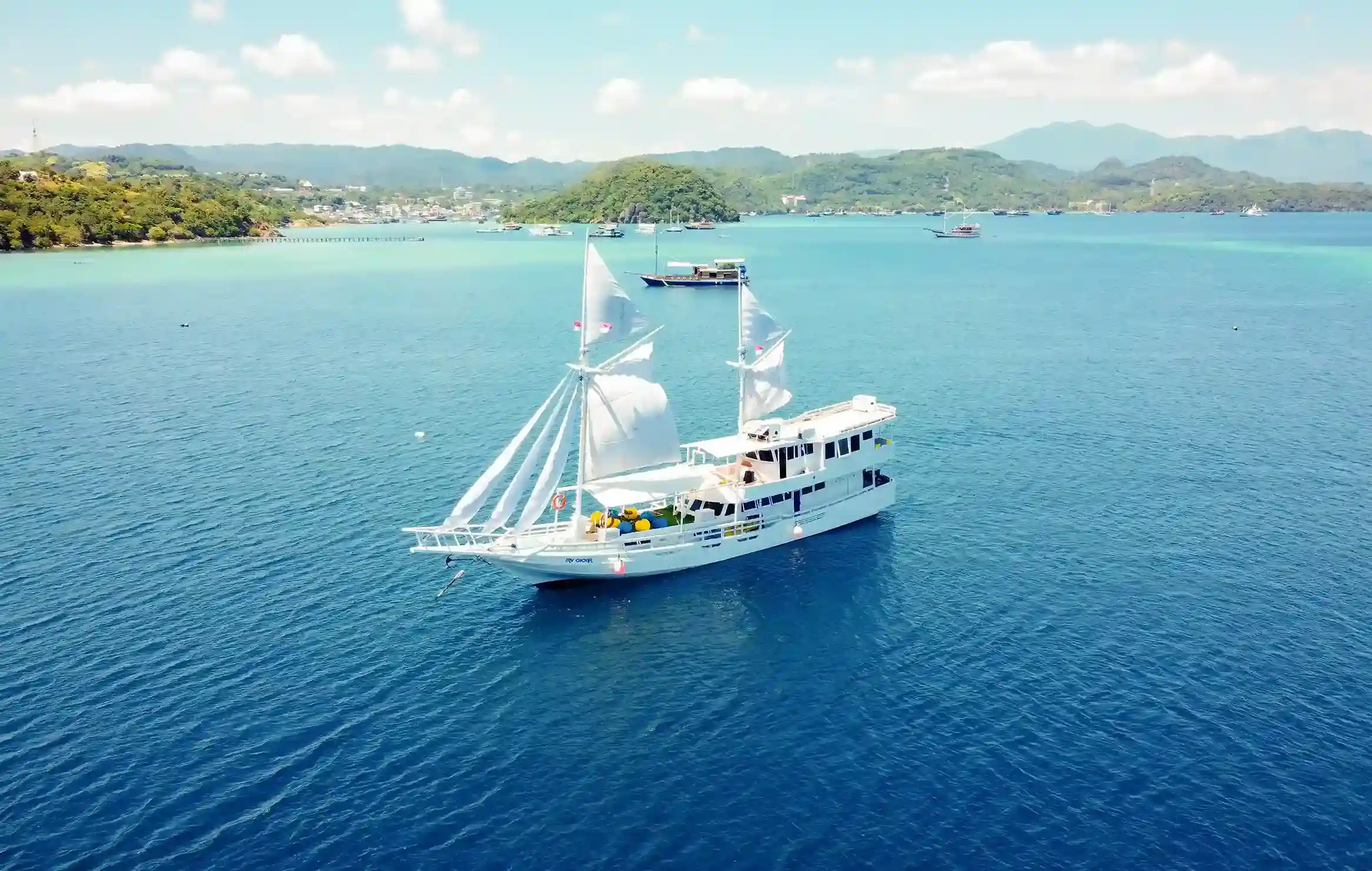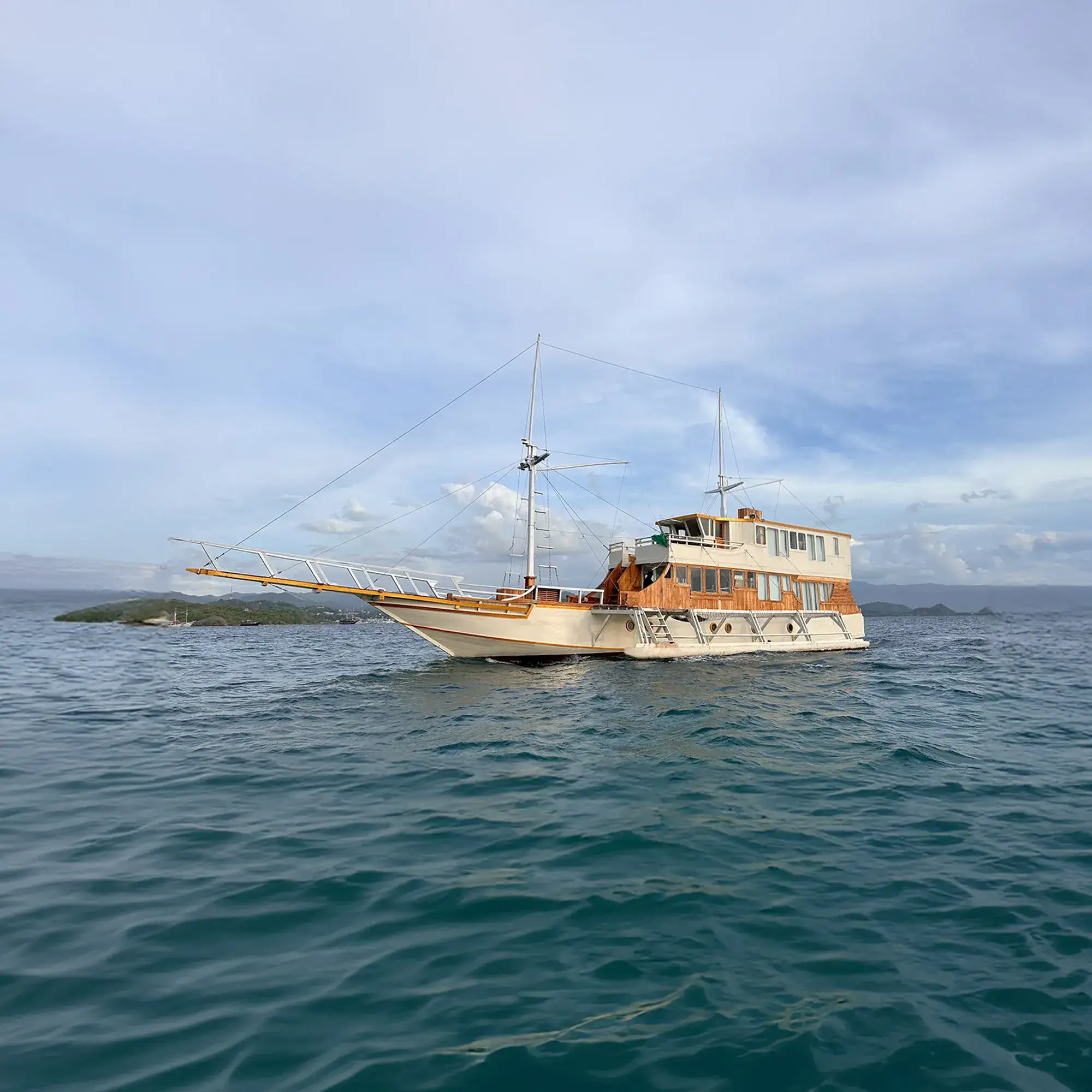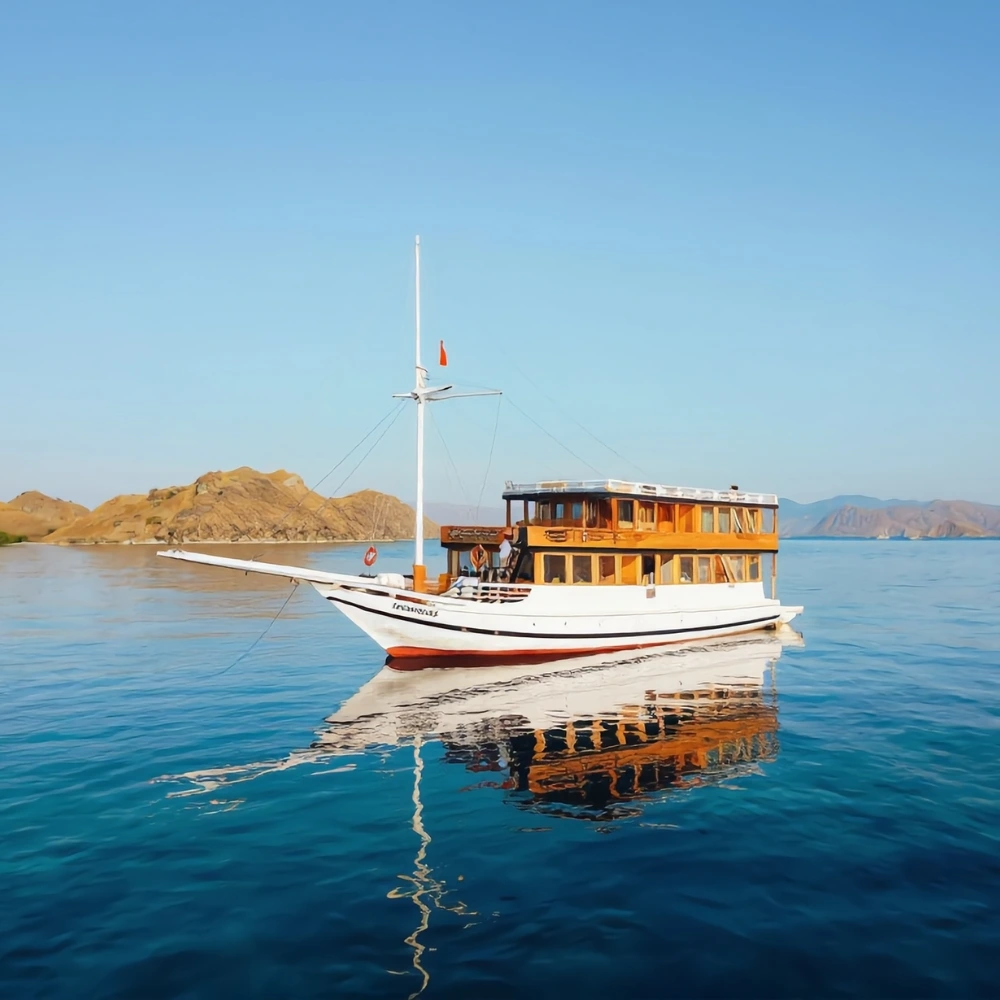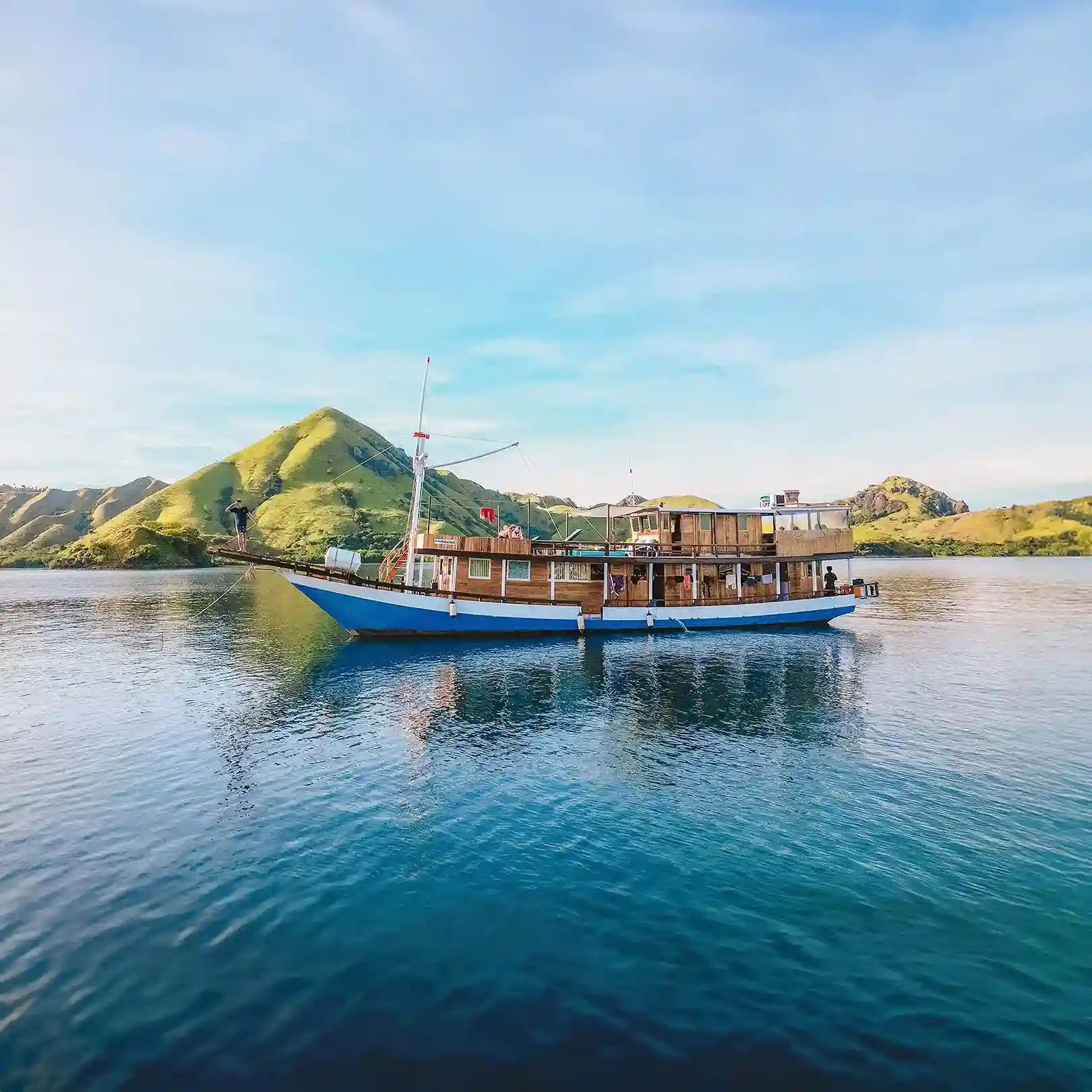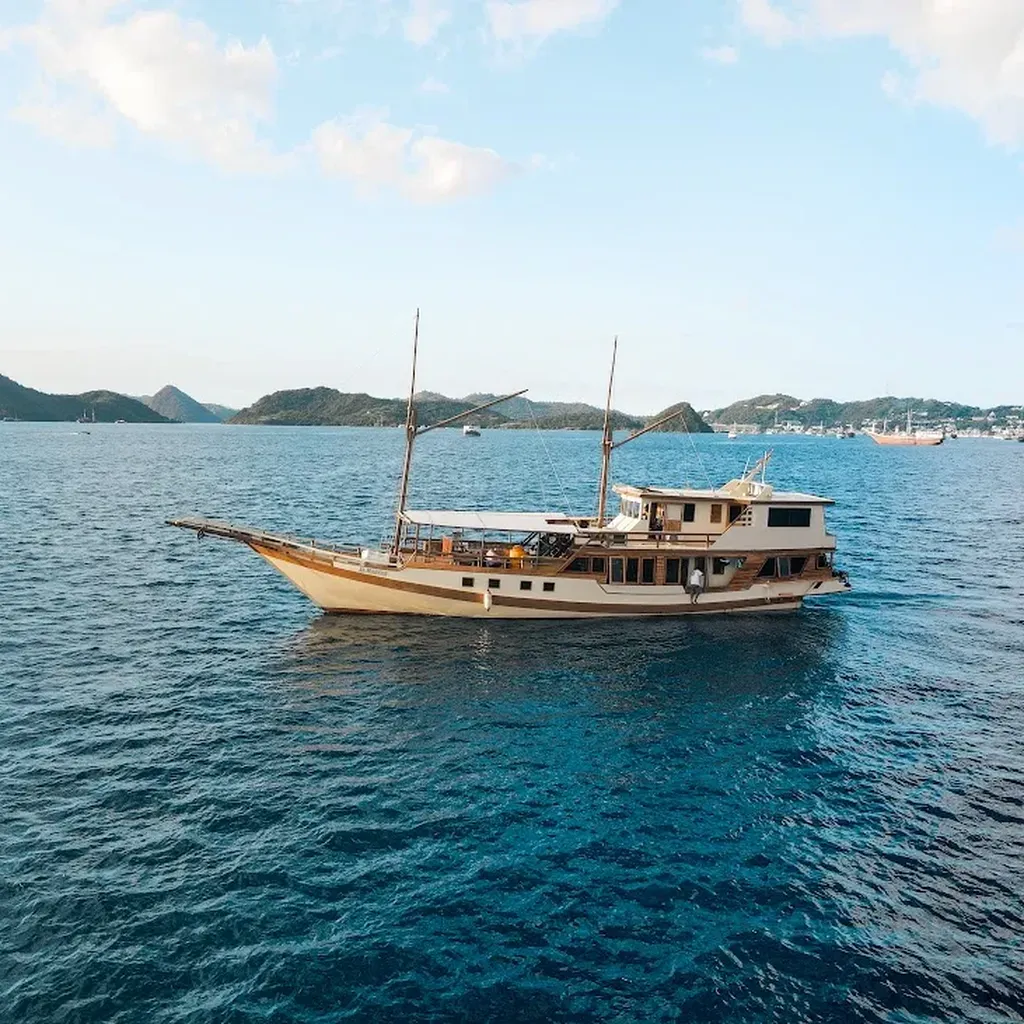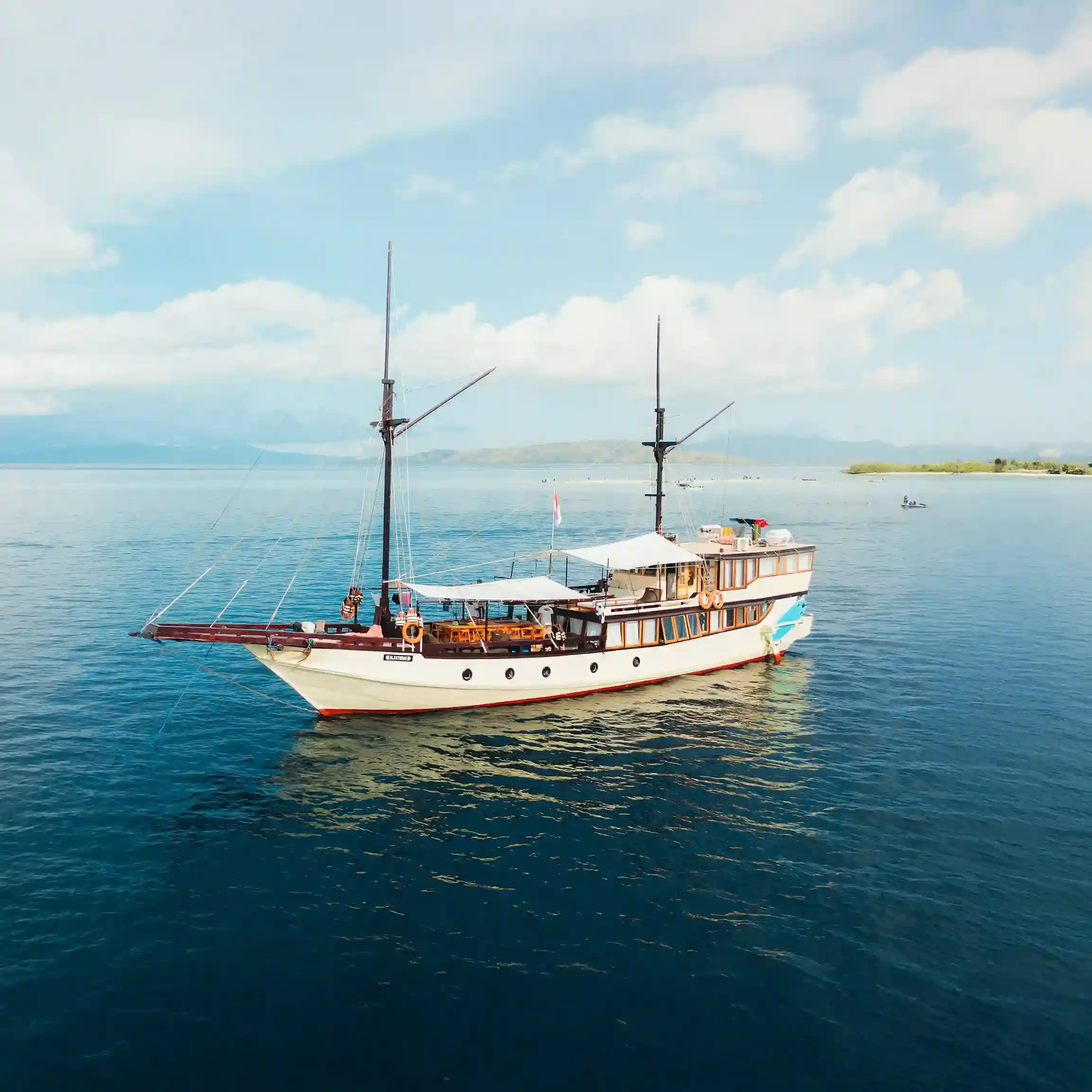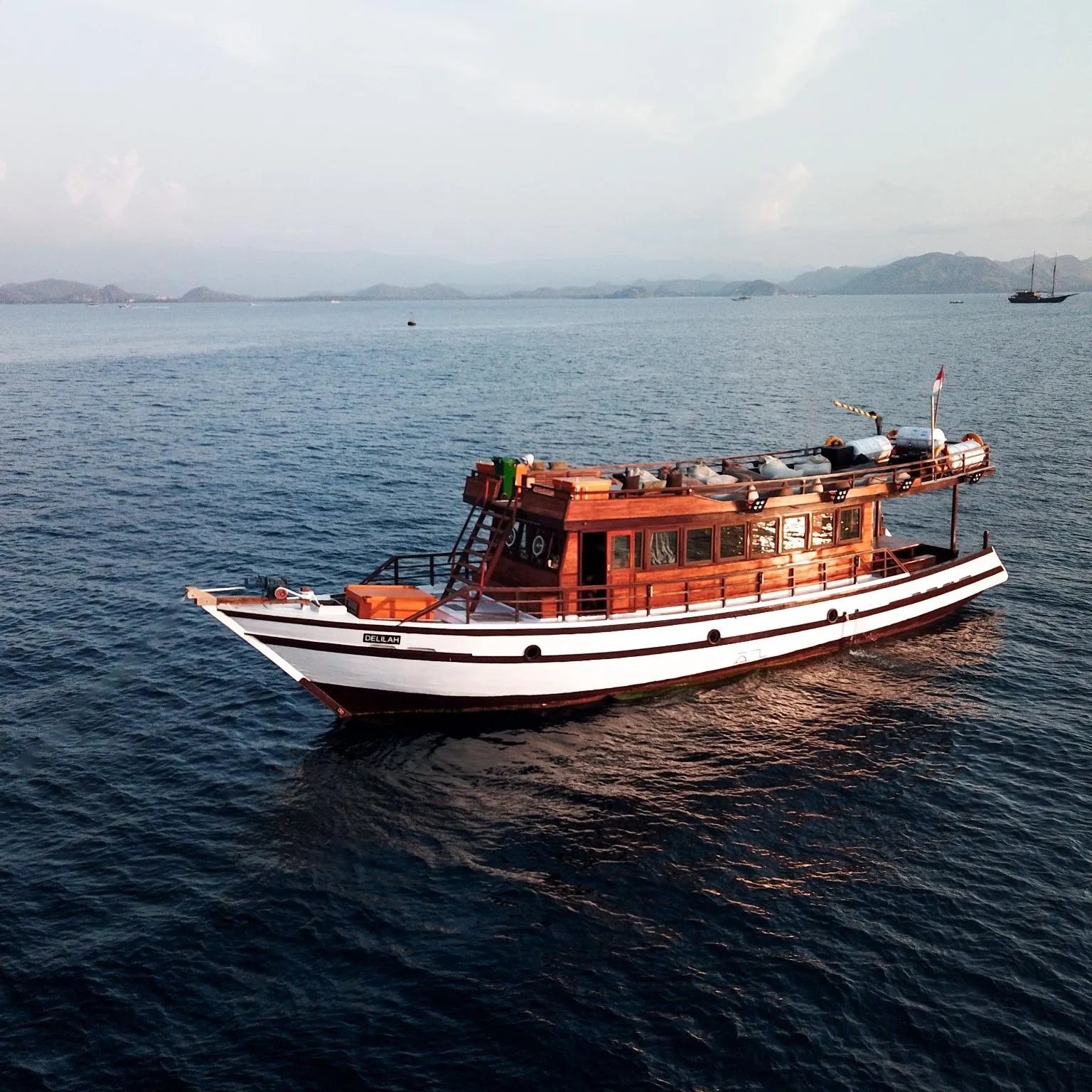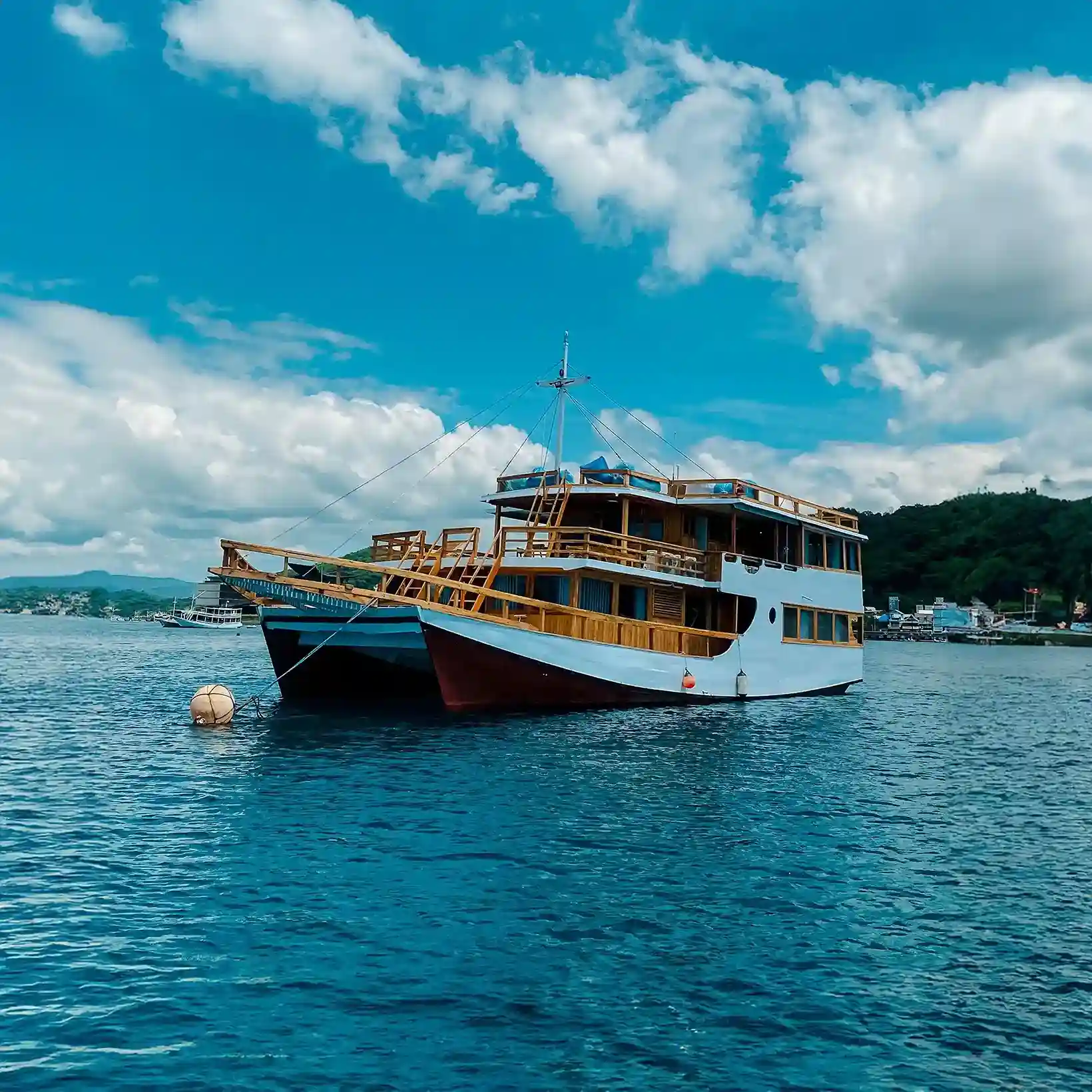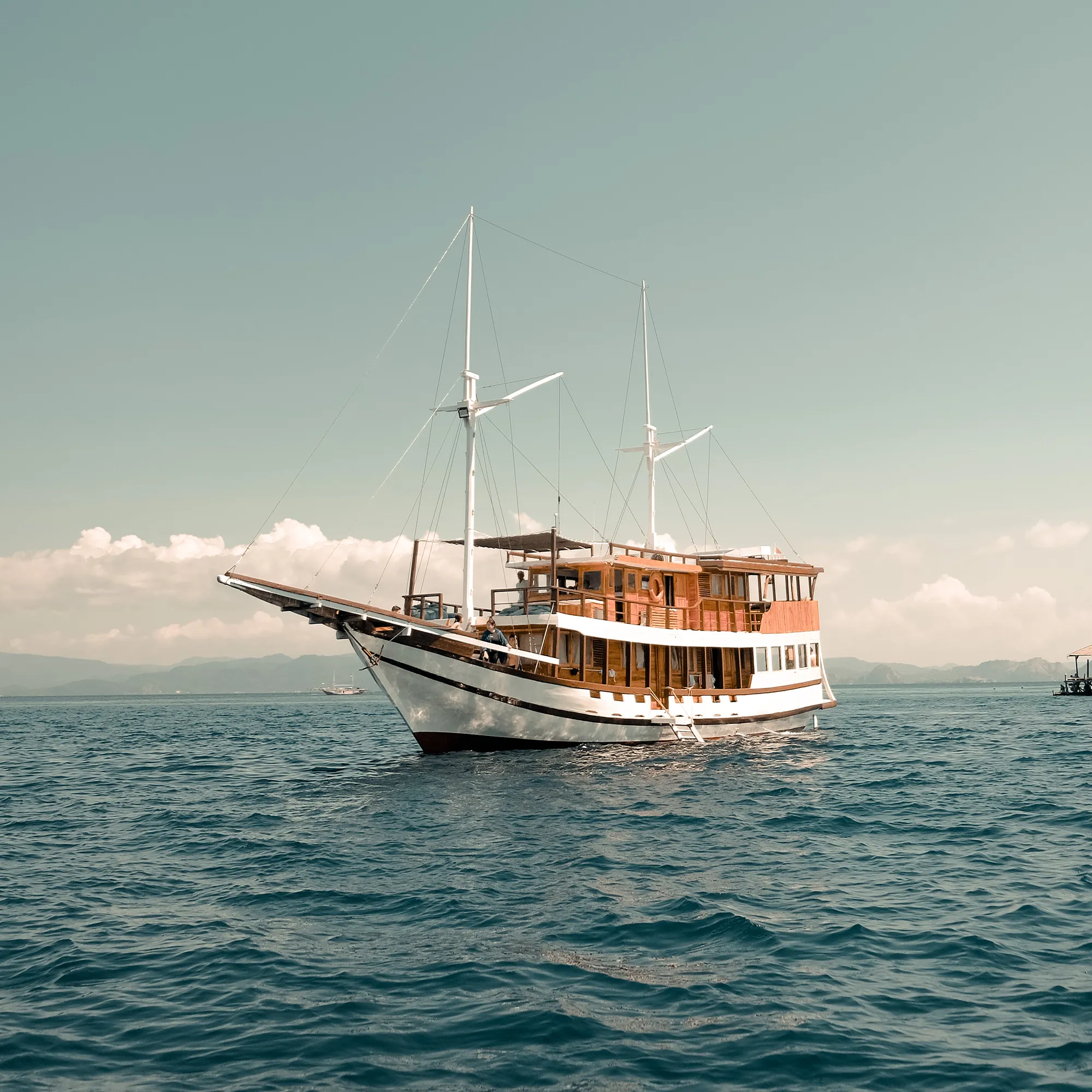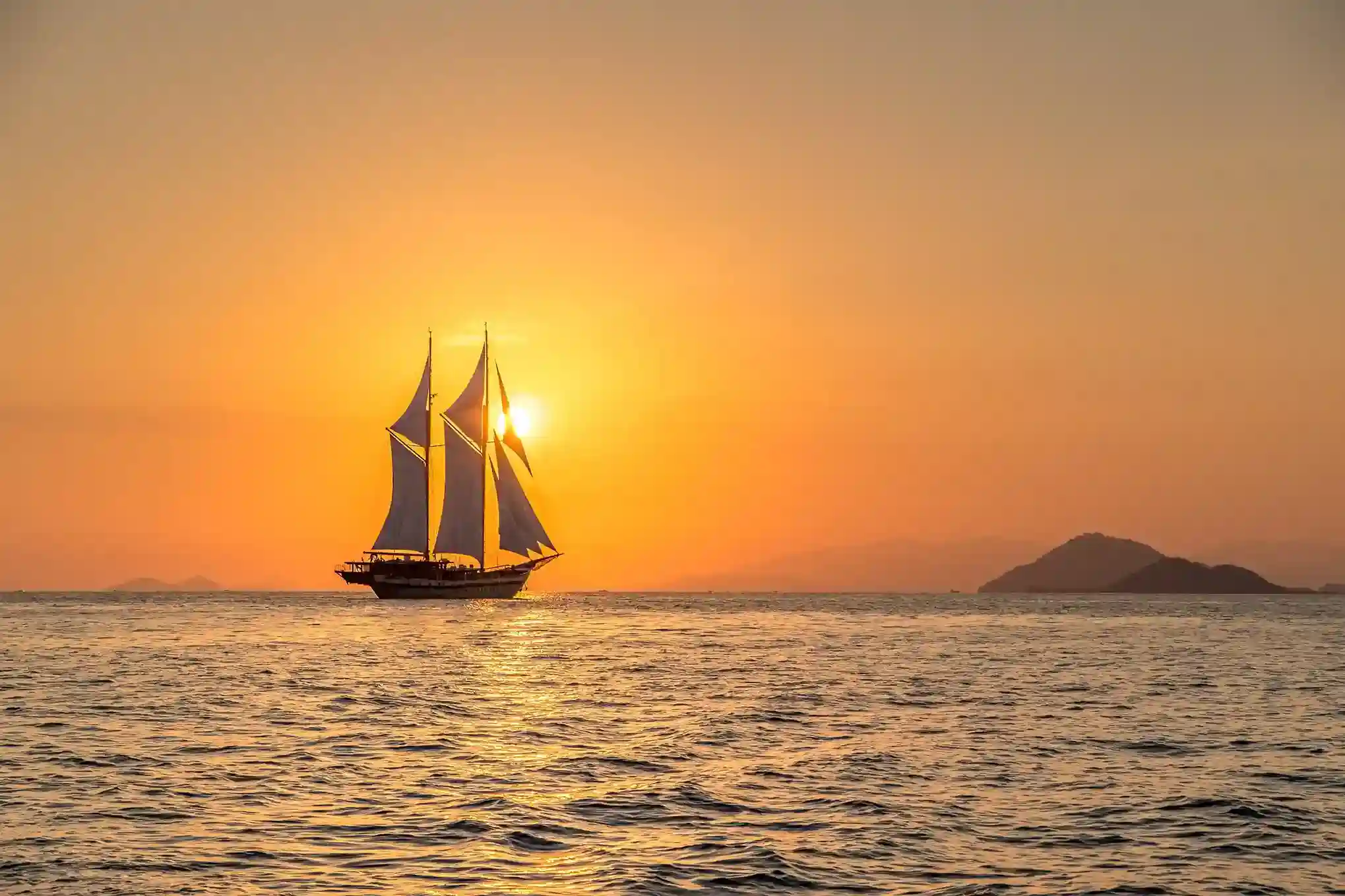
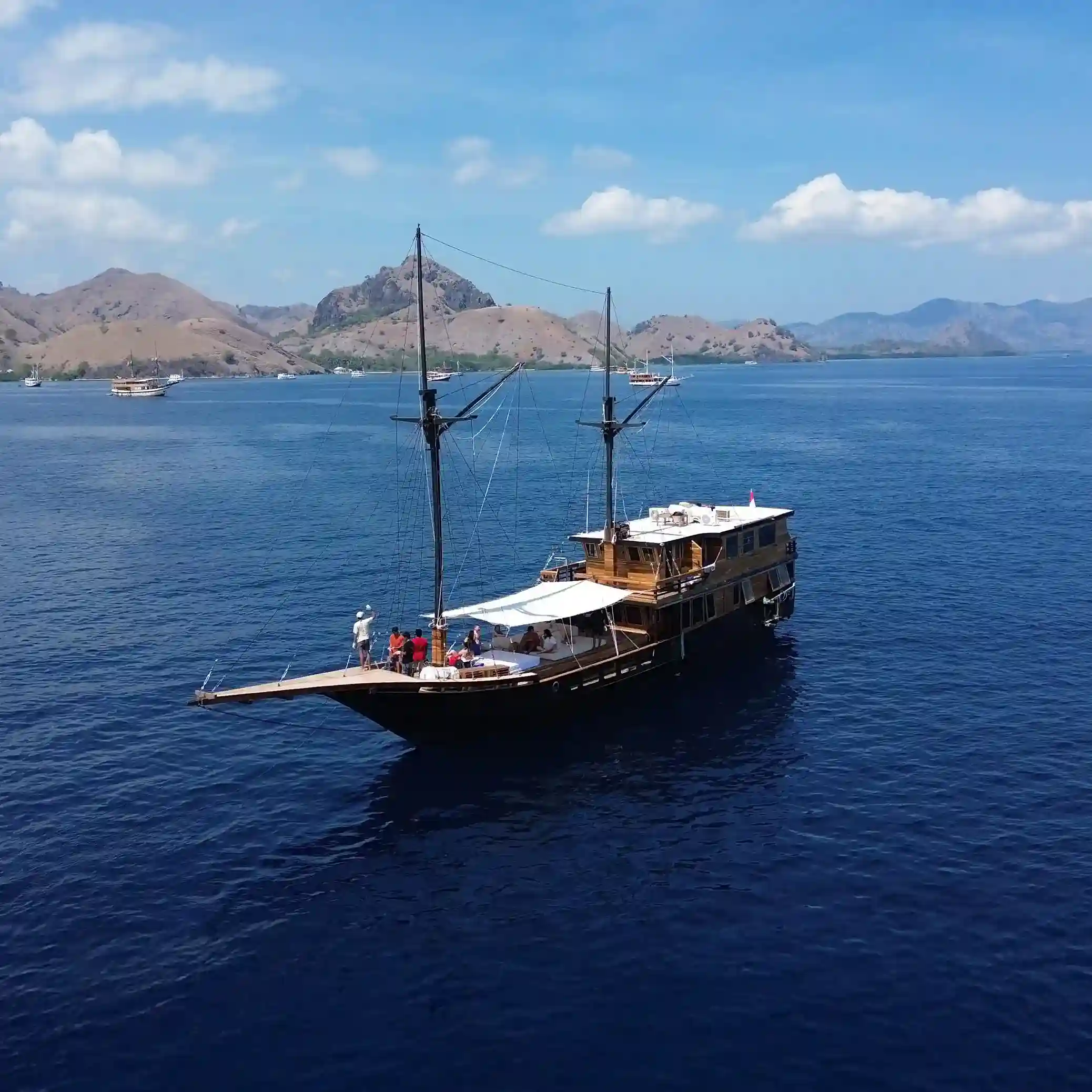
About Blackbeard
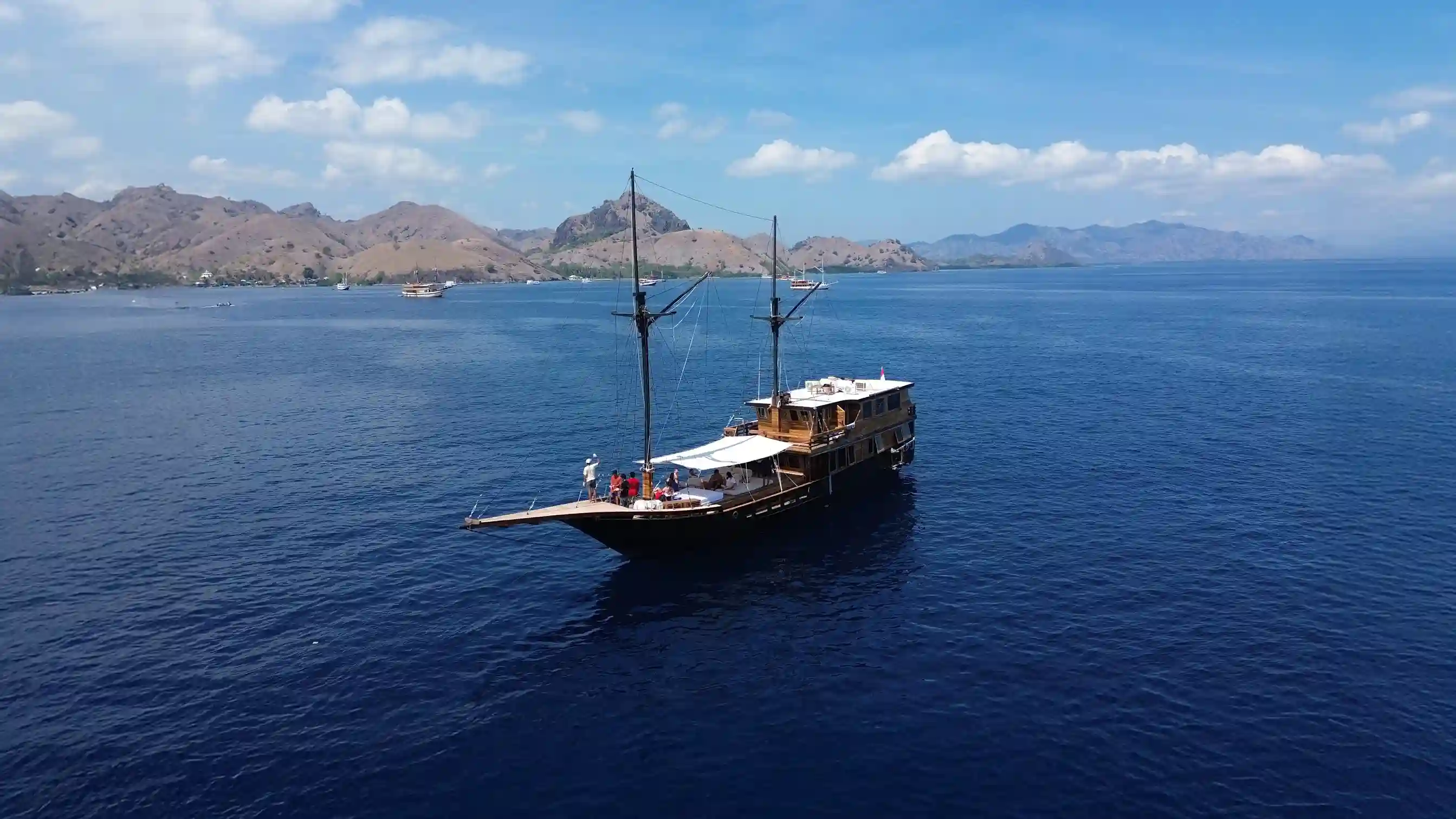
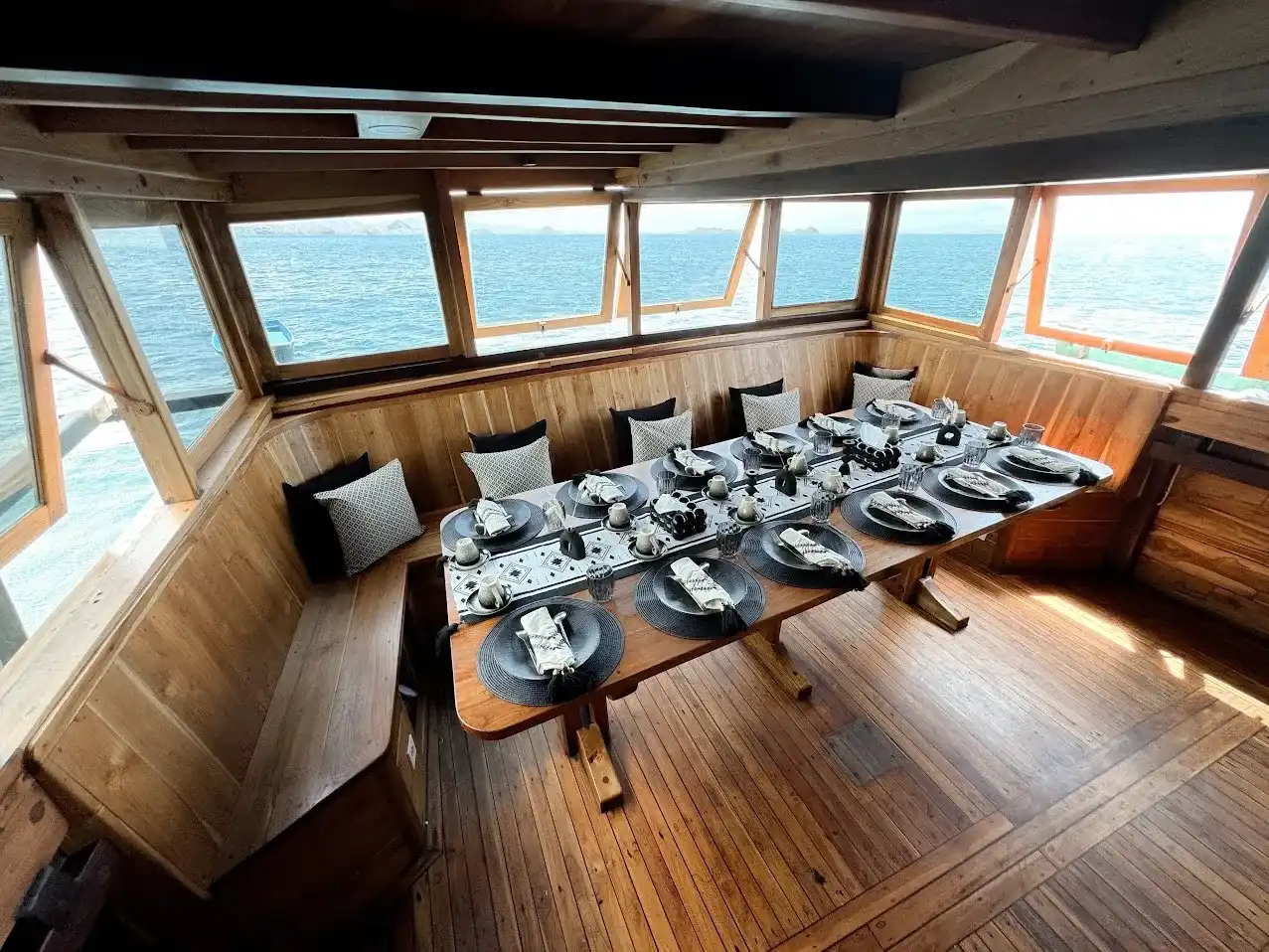
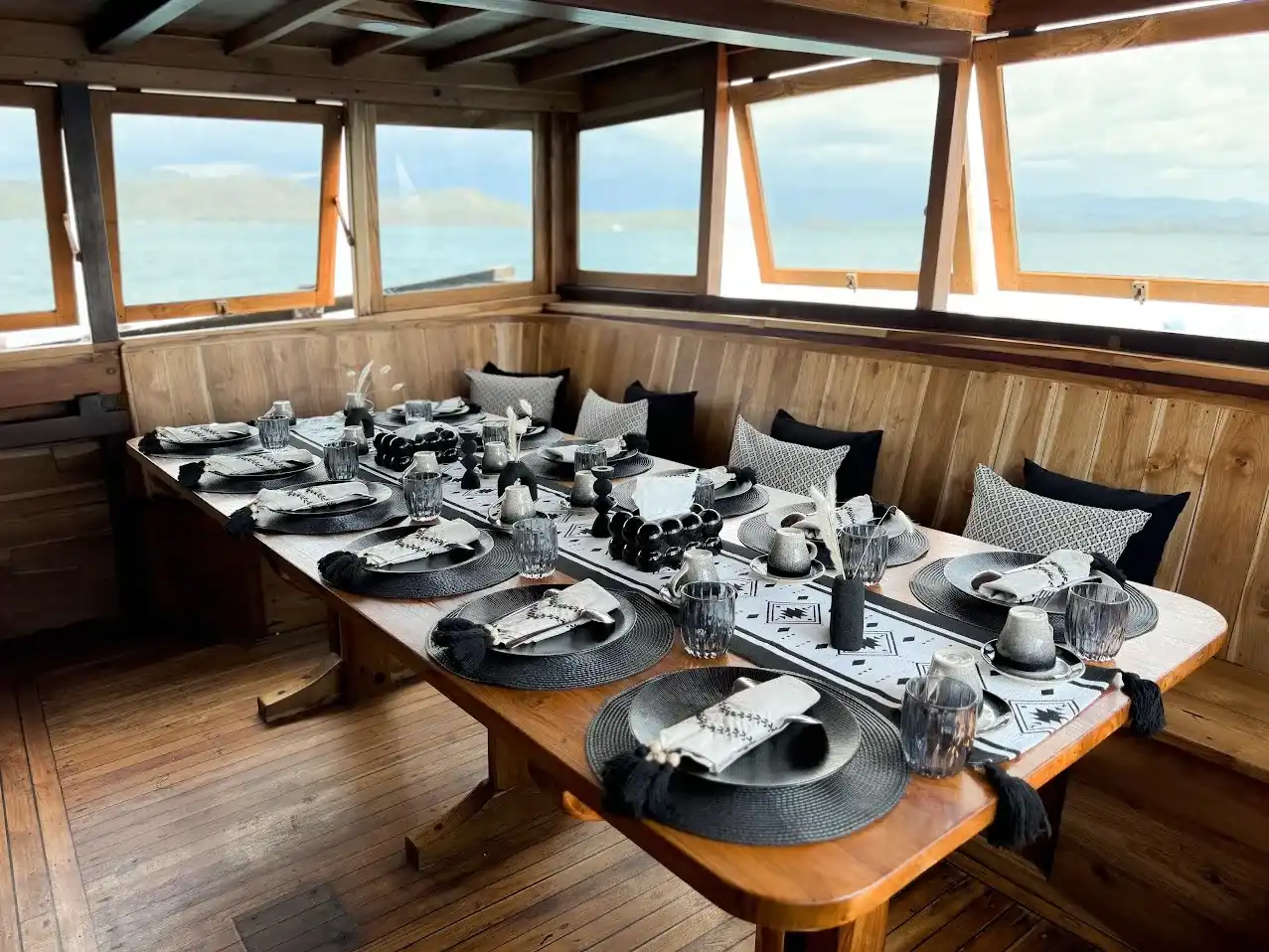
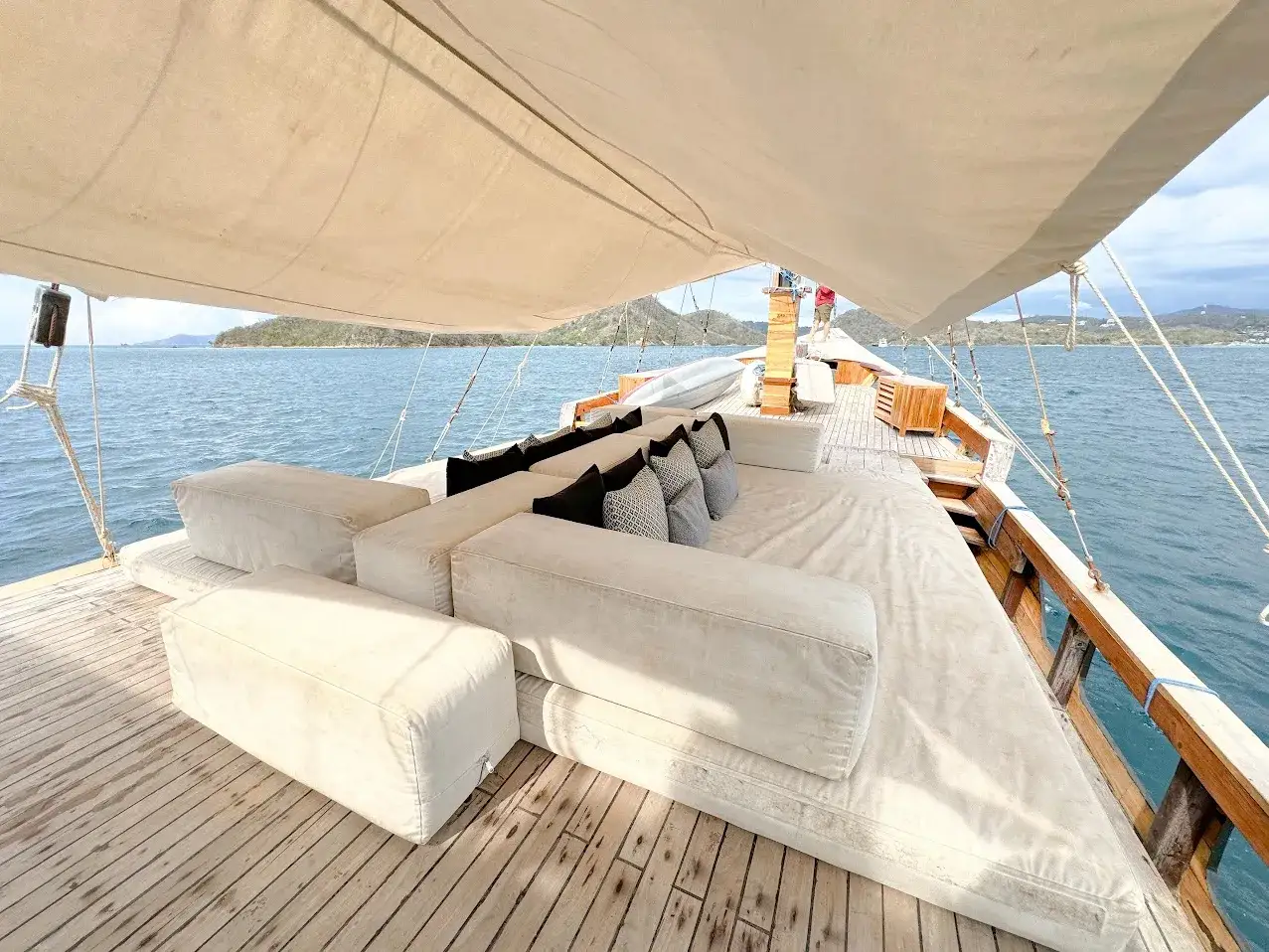
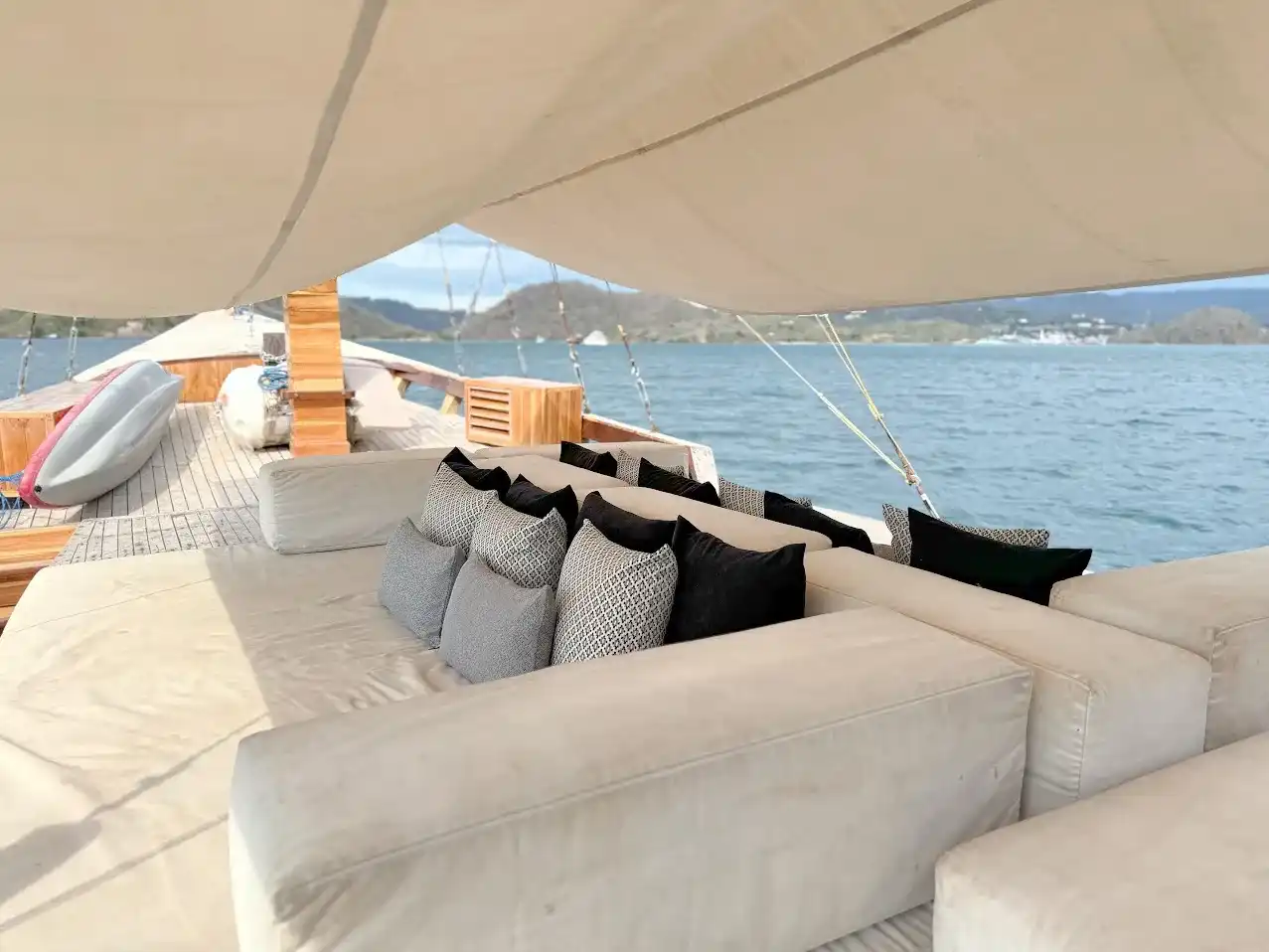
The first morning on Blackbeard began with golden light spilling across the teak deck. I was up early, wrapped in a thin blanket against the slight chill, sitting on the forward bench as the crew quietly adjusted lines. Blackbeard had anchored overnight off Kelor, and from that quiet vantage, I watched reef sharks slice through the shallows below. One circled back, dark fin cutting the surface like a clockwork toy. By 7:30, the smell of fried shallots and coffee pulled everyone to the dining area, where breakfast was already laid out on banana leaves—scrambled eggs, local banana, and toast with house-made jackfruit jam.
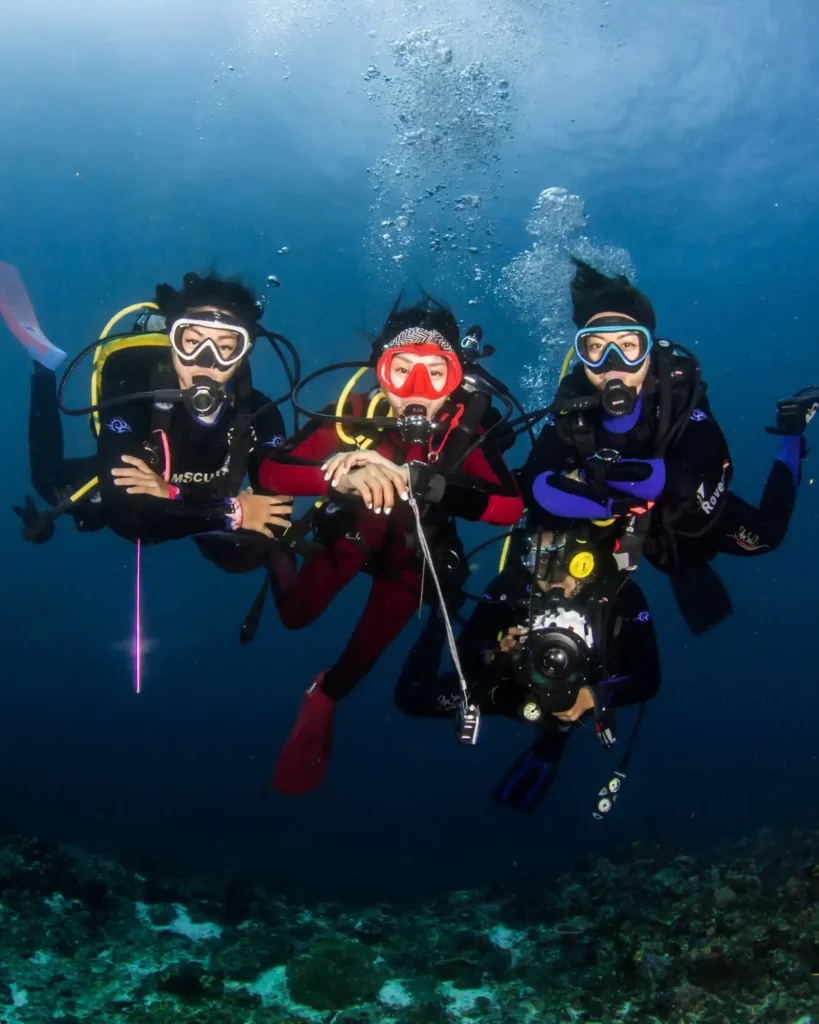
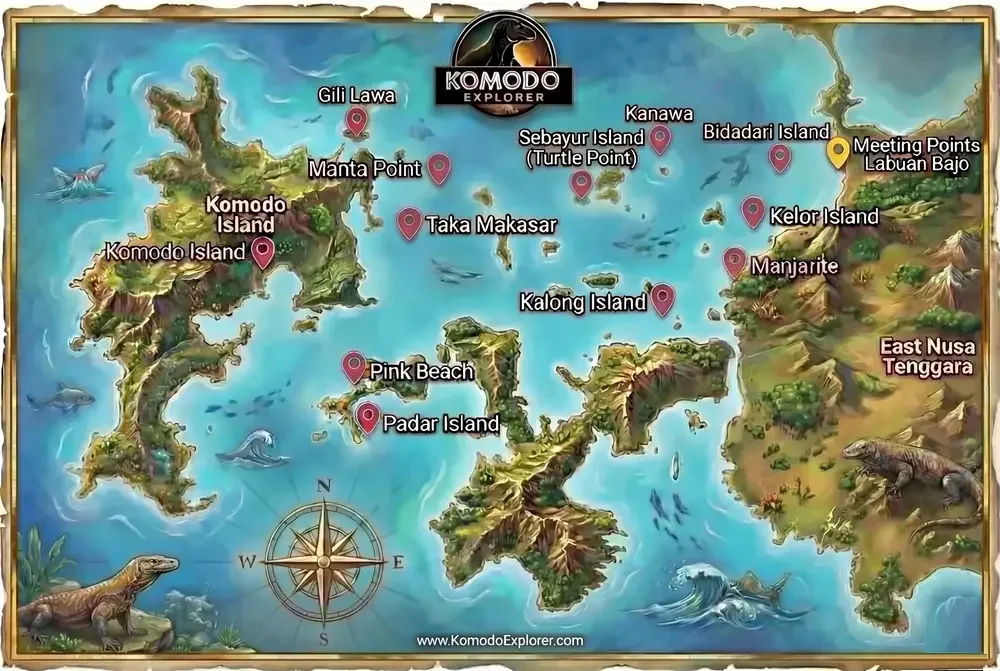
We spent the first full day moving between four sites. Padar greeted us at sunrise, the pink sand glowing under a low sun as we hiked the eastern ridge with our guide, Wayan. He pointed out nesting frigatebirds above the cliffs and stopped us just past the summit to explain how the island’s three-bay curve formed from ancient volcanic collapse. After descending, we swam at Pink Beach, the coral just ten meters out showing healthy stands of staghorn and a single hawksbill turtle drifting between them. Later, at Manta Point, I floated face-down for nearly half an hour as two mantas circled the cleaning station, their mouths open, gill slits pulsing.
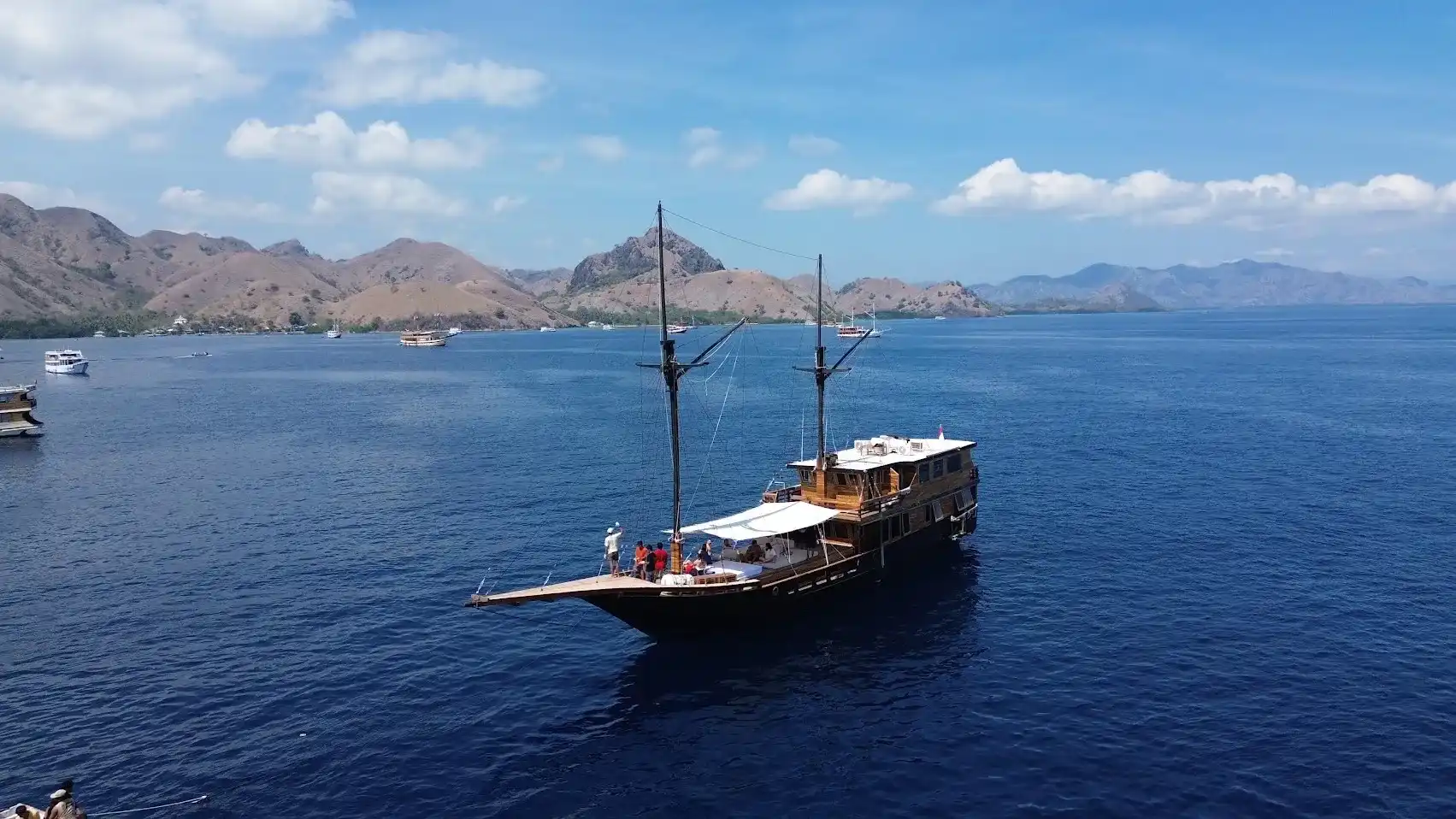
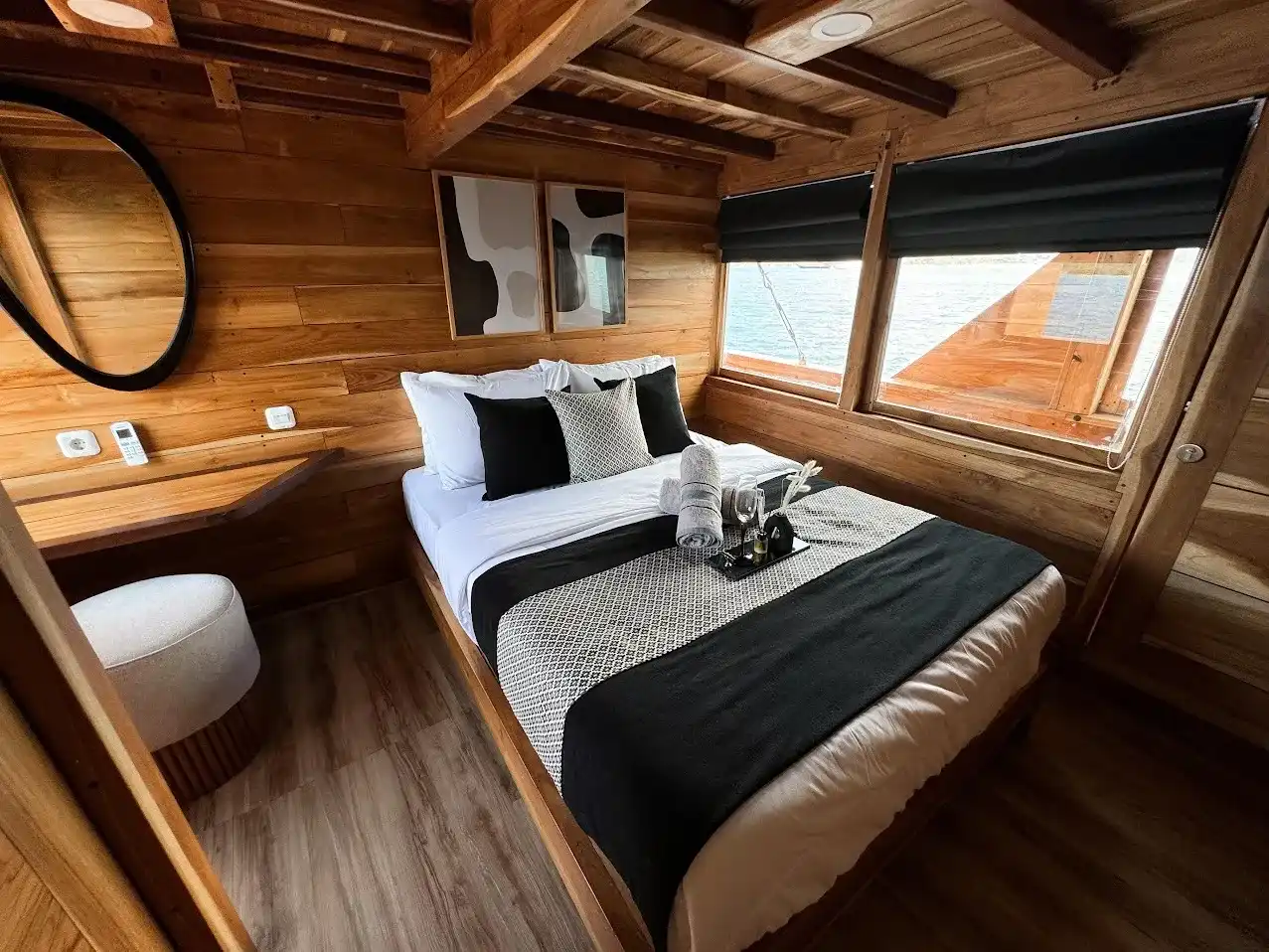
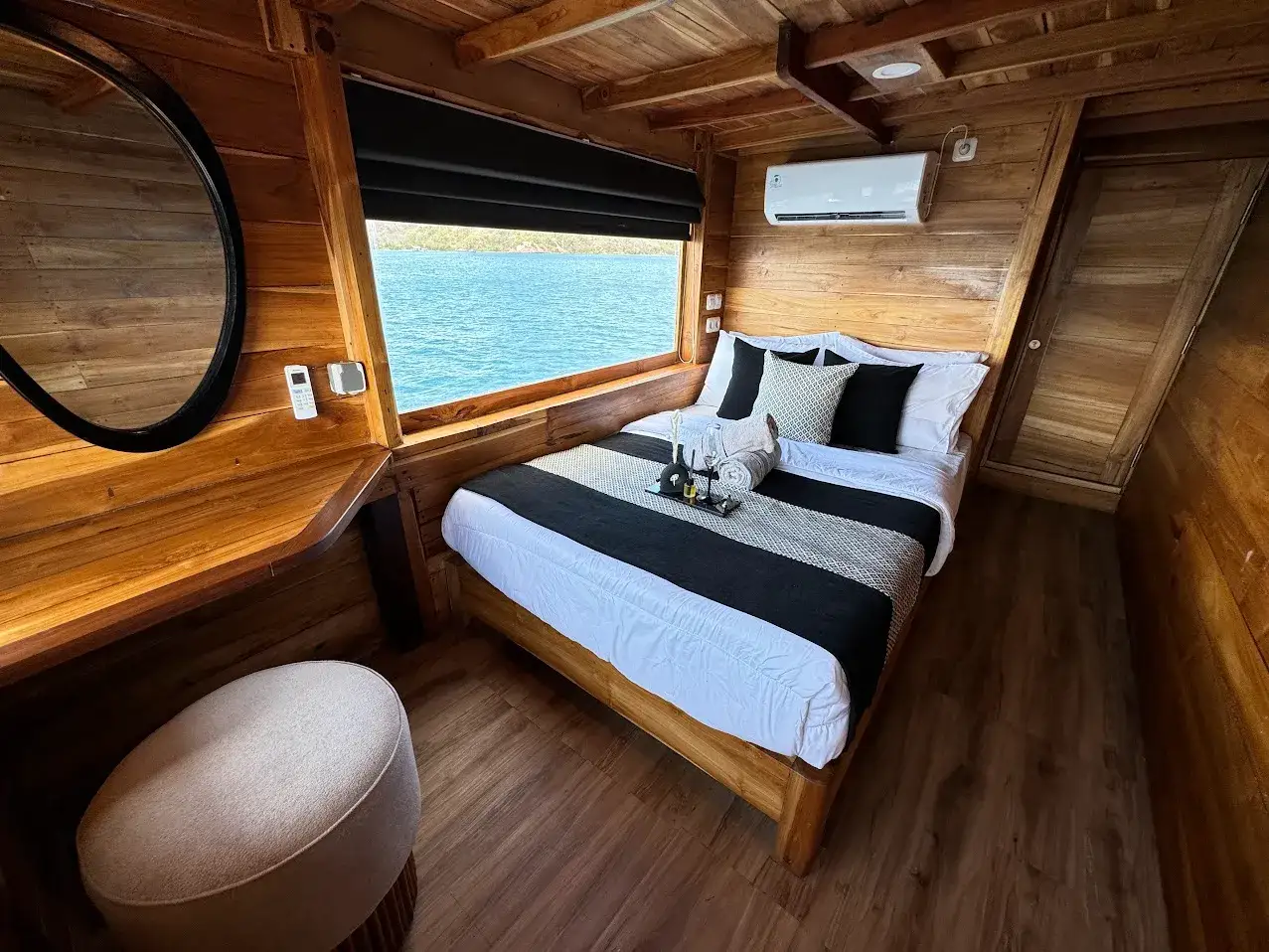
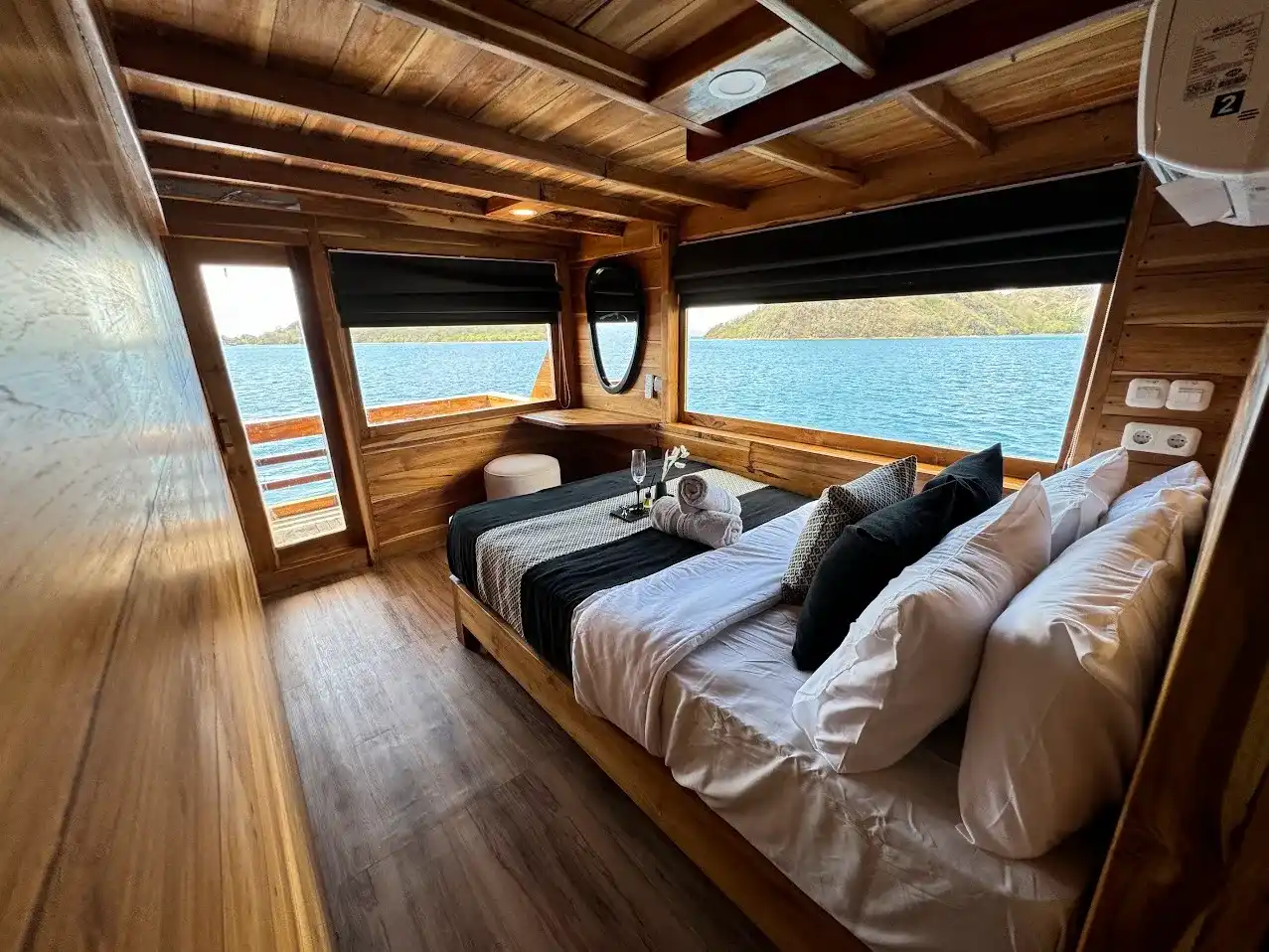
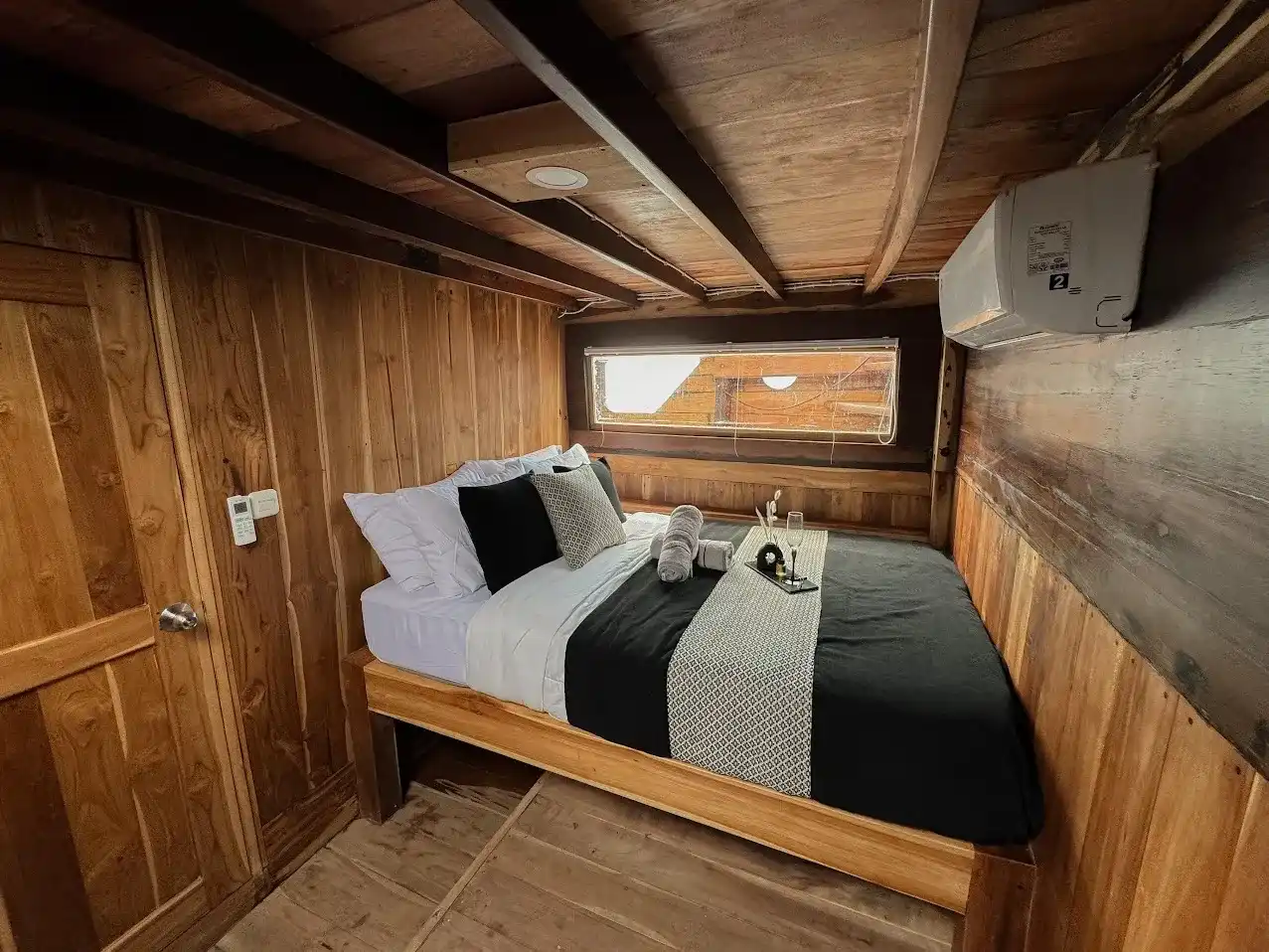
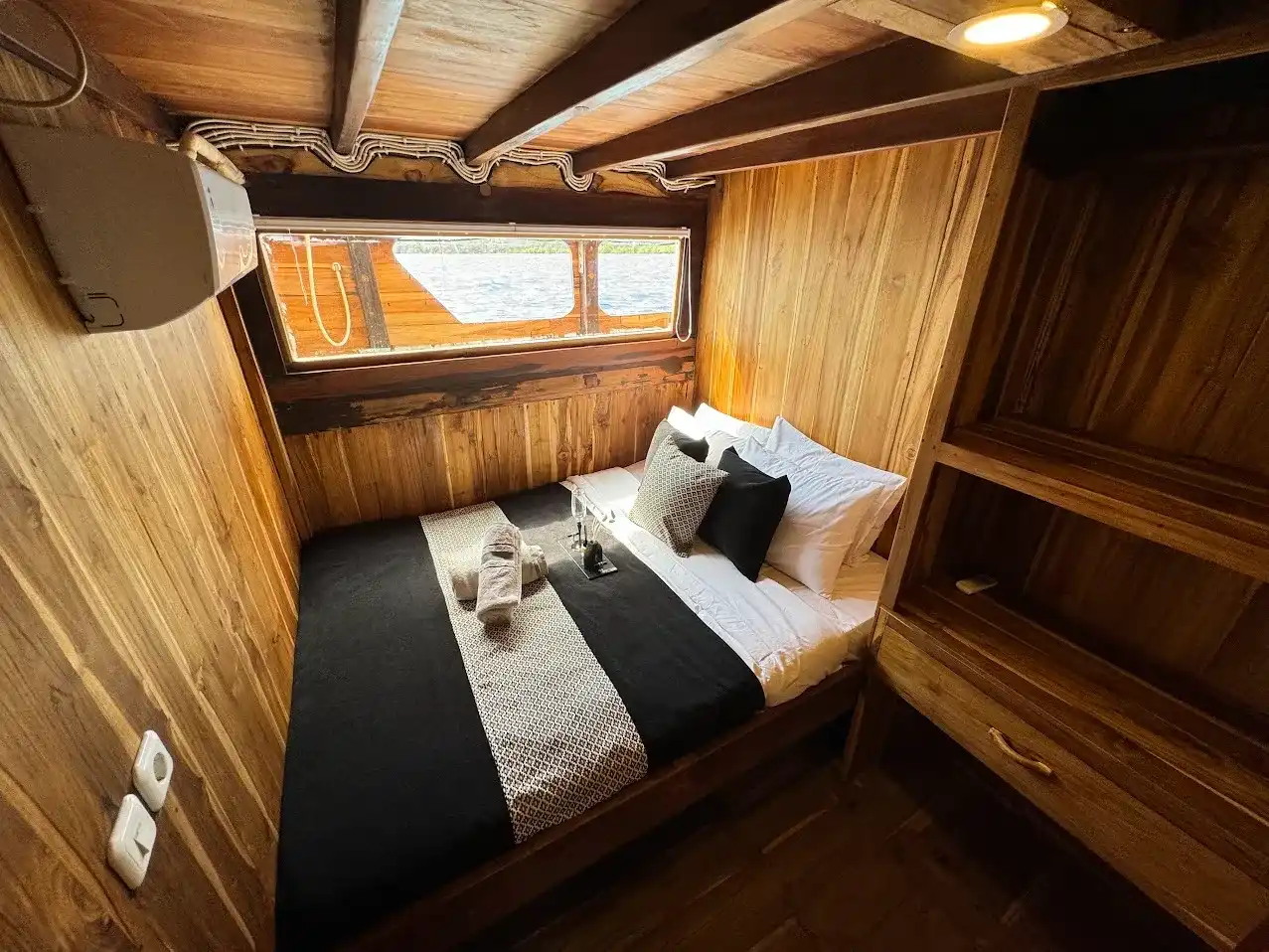
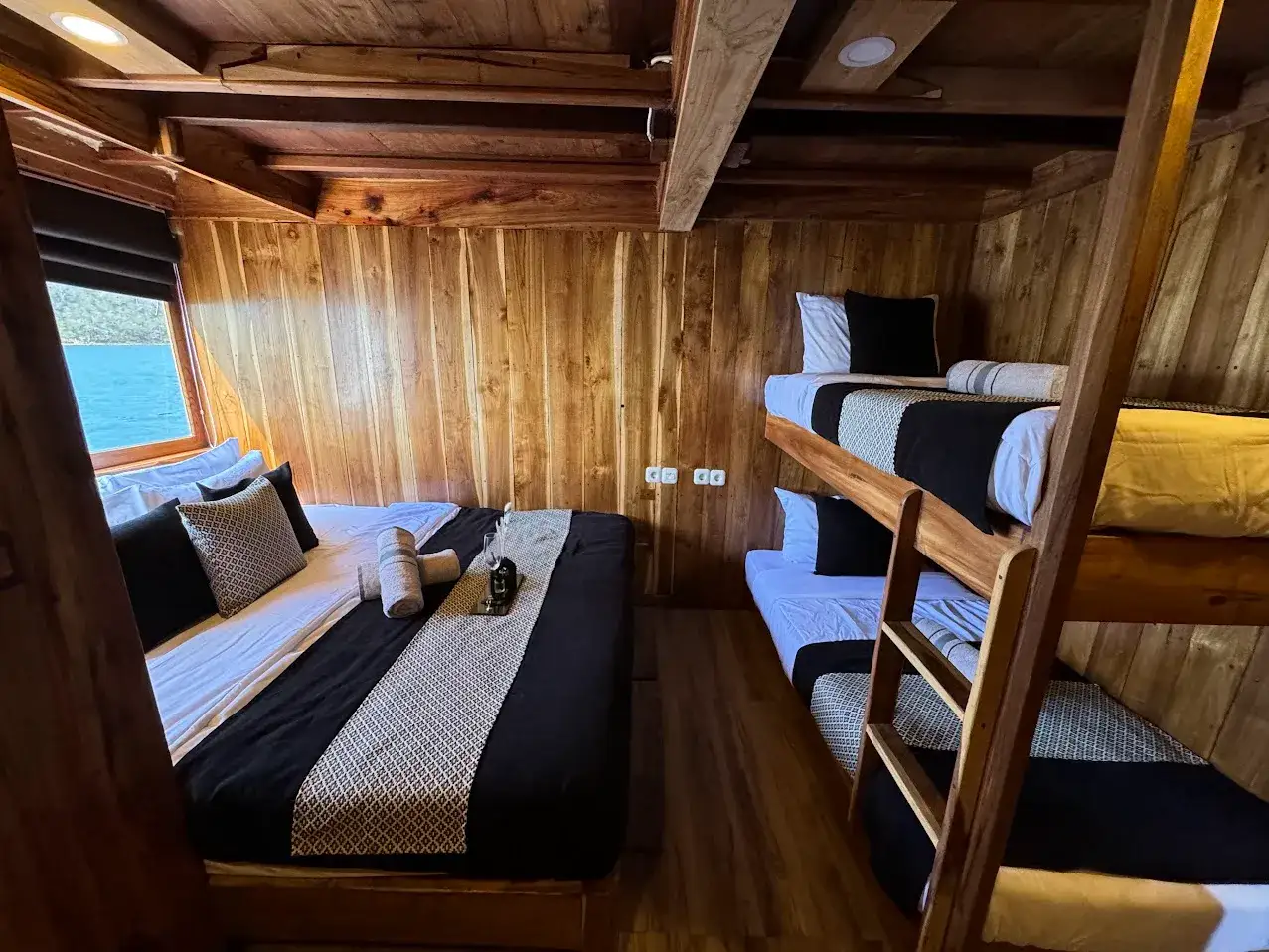
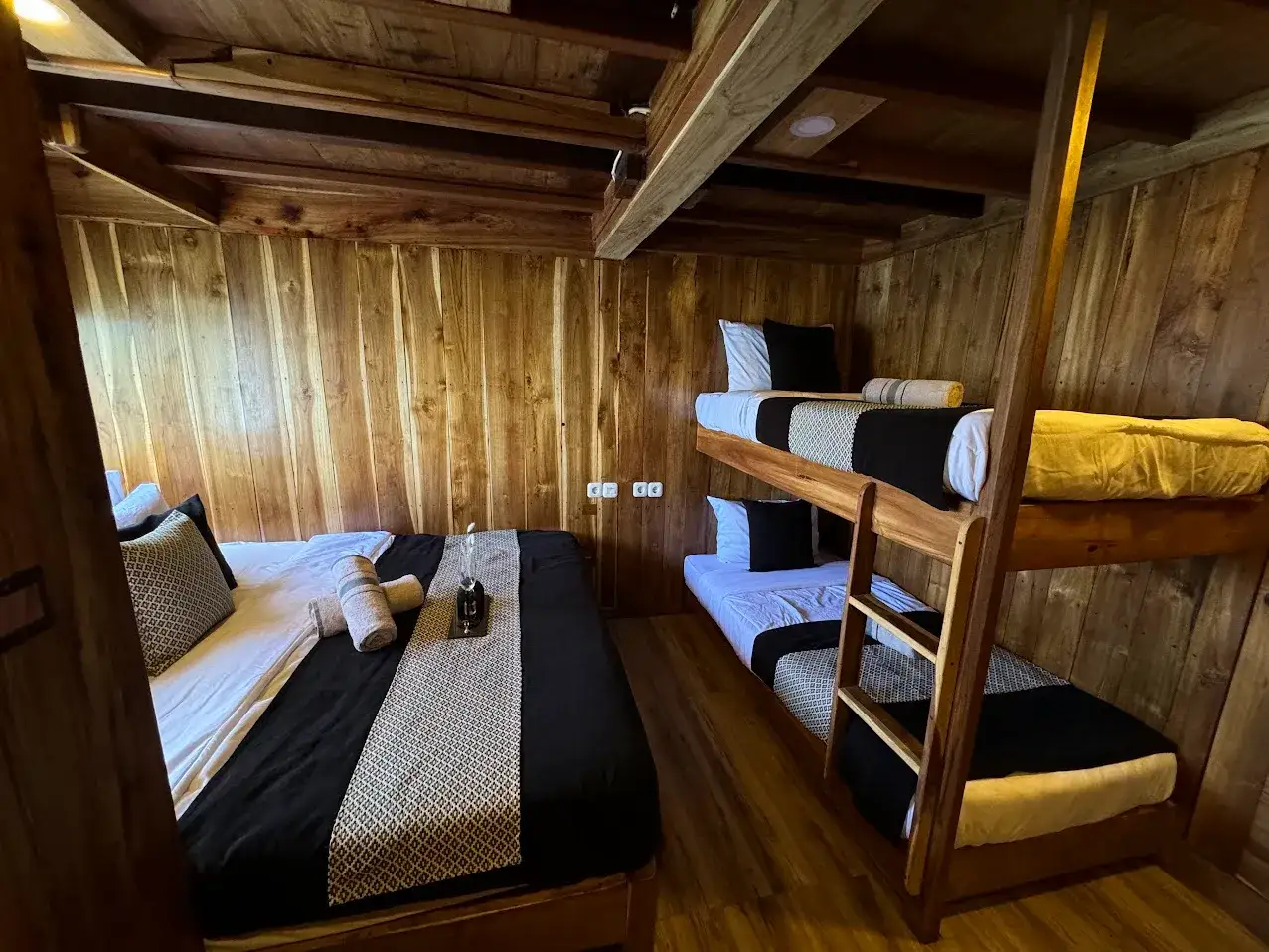
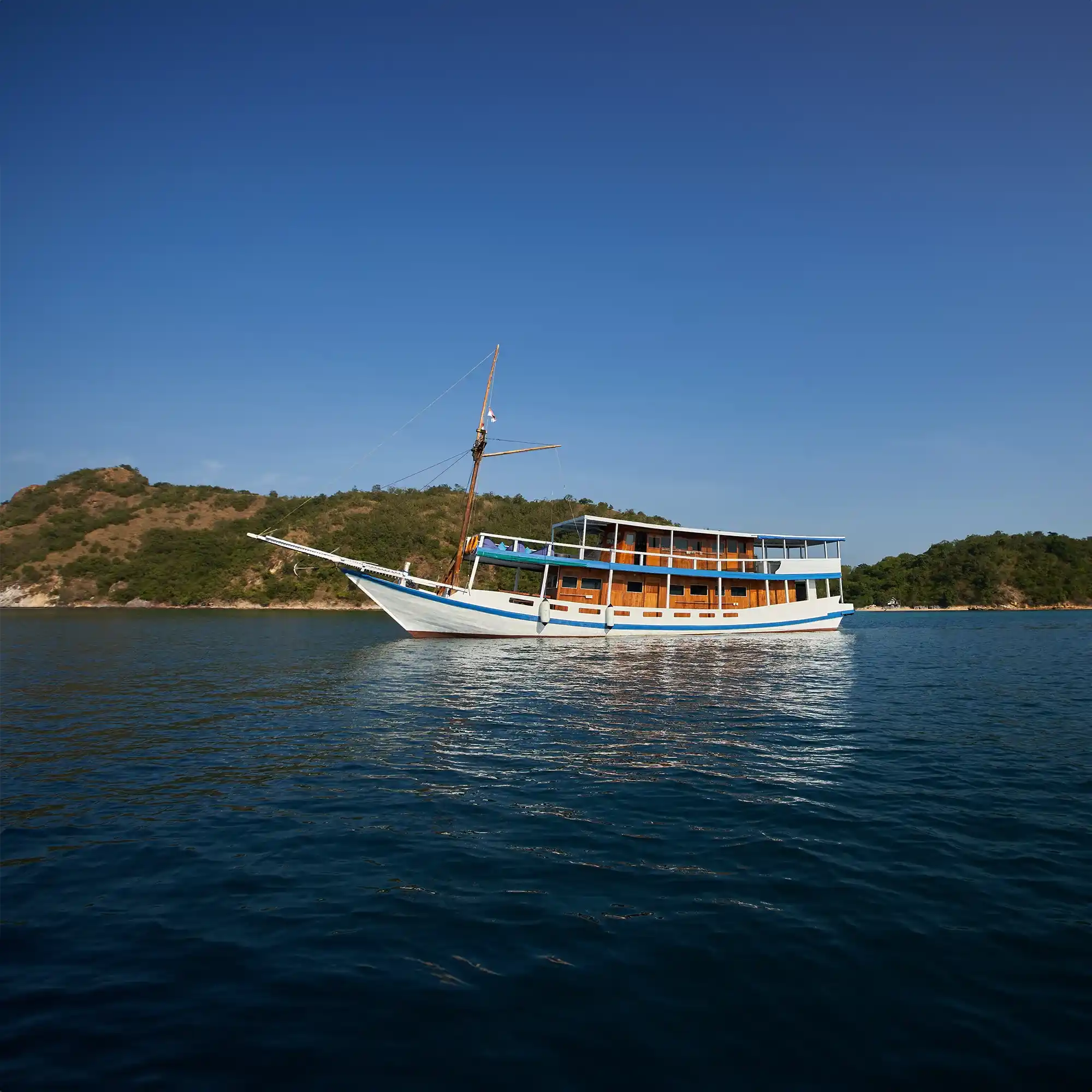
The boat itself was compact but never felt crowded. With only one cabin, it was clear this setup was meant for couples or solo travellers wanting privacy. My room had a proper queen bed—not two twins pushed together—with teak framing and a reading lamp that clicked off with a satisfying snap. The ensuite bathroom used real tiles, not laminate, and had consistent hot water even after a midday snorkel. Storage was tight, but the crew offered to hang damp gear in the dry locker below deck, which stayed cool and aired out by a small fan.
Day three took us to Taka Makassar, a sandbar that emerges at low tide. We arrived by 9:15 and had it nearly to ourselves—just our group and a single ranger boat. We waded out, took photos, then snorkeled the outer edge where the current kicked up schools of anthias and a lone emperor fish with a torn fin. Kanawa came next, with its shallow volcanic sandbank and deeper drop-offs where blue-spotted stingrays buried themselves under the silt. I saw one flush out as I drifted too close, wings flapping like a startled bird. We returned to Labuan Bajo just after 2 PM, the engine slowing as we passed the fishing boats near the harbour.
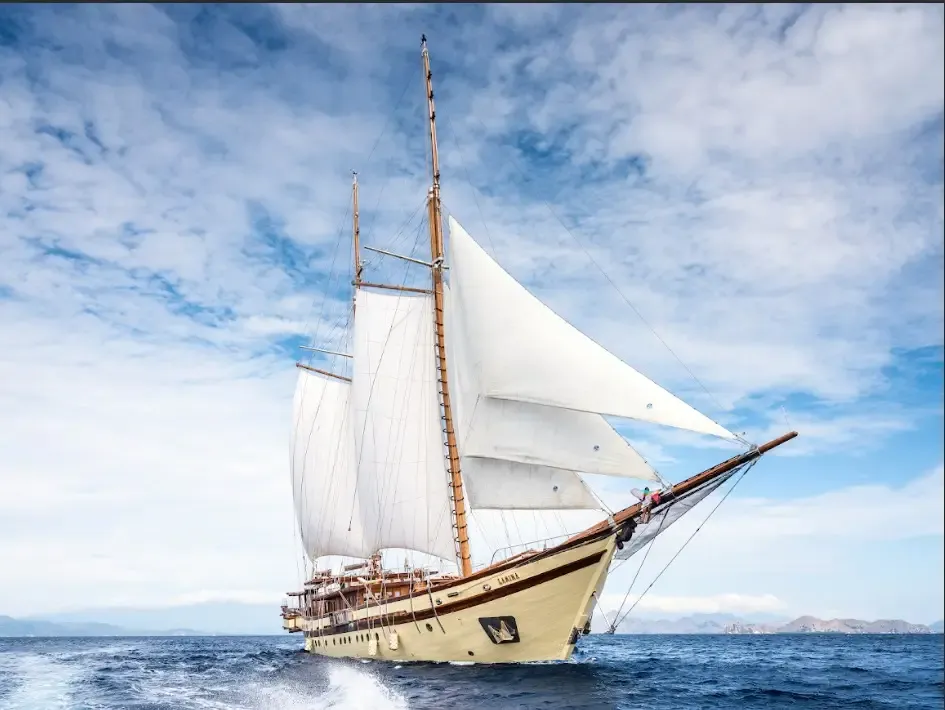
What stayed with me wasn’t just the wildlife or the views, but the rhythm of the days. Meals came at the right time—lunch was nasi campur with grilled skipjack and sambal matah, always served before the afternoon heat peaked. The crew didn’t hover; they anticipated. Water bottles were refilled without asking. Snorkel gear laid out 15 minutes before each site. And at night, they rigged a line between the masts with fairy lights, just enough glow to read by without drawing moths. It wasn’t flashy, but it felt honest—like they’d done this a hundred times and knew what actually mattered.