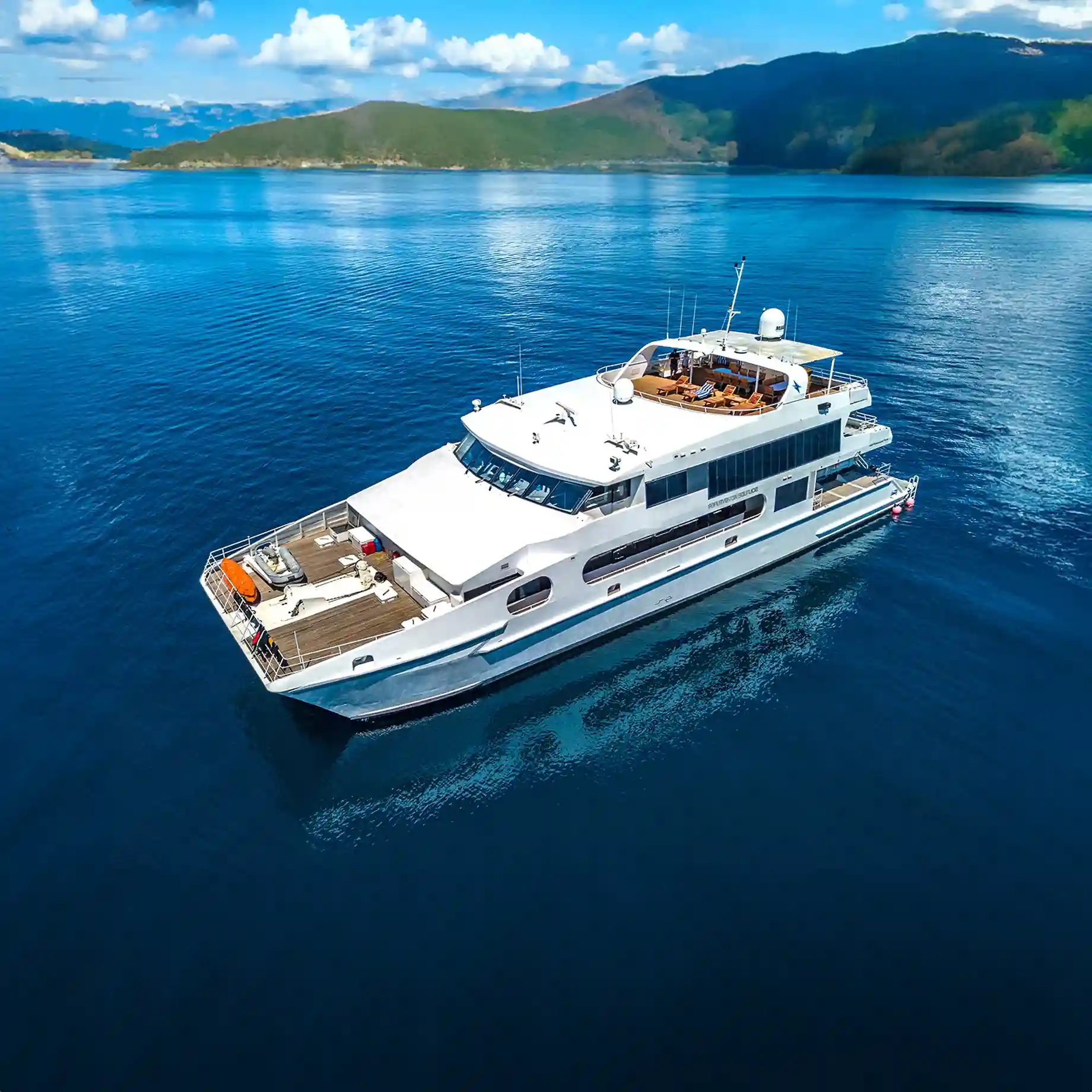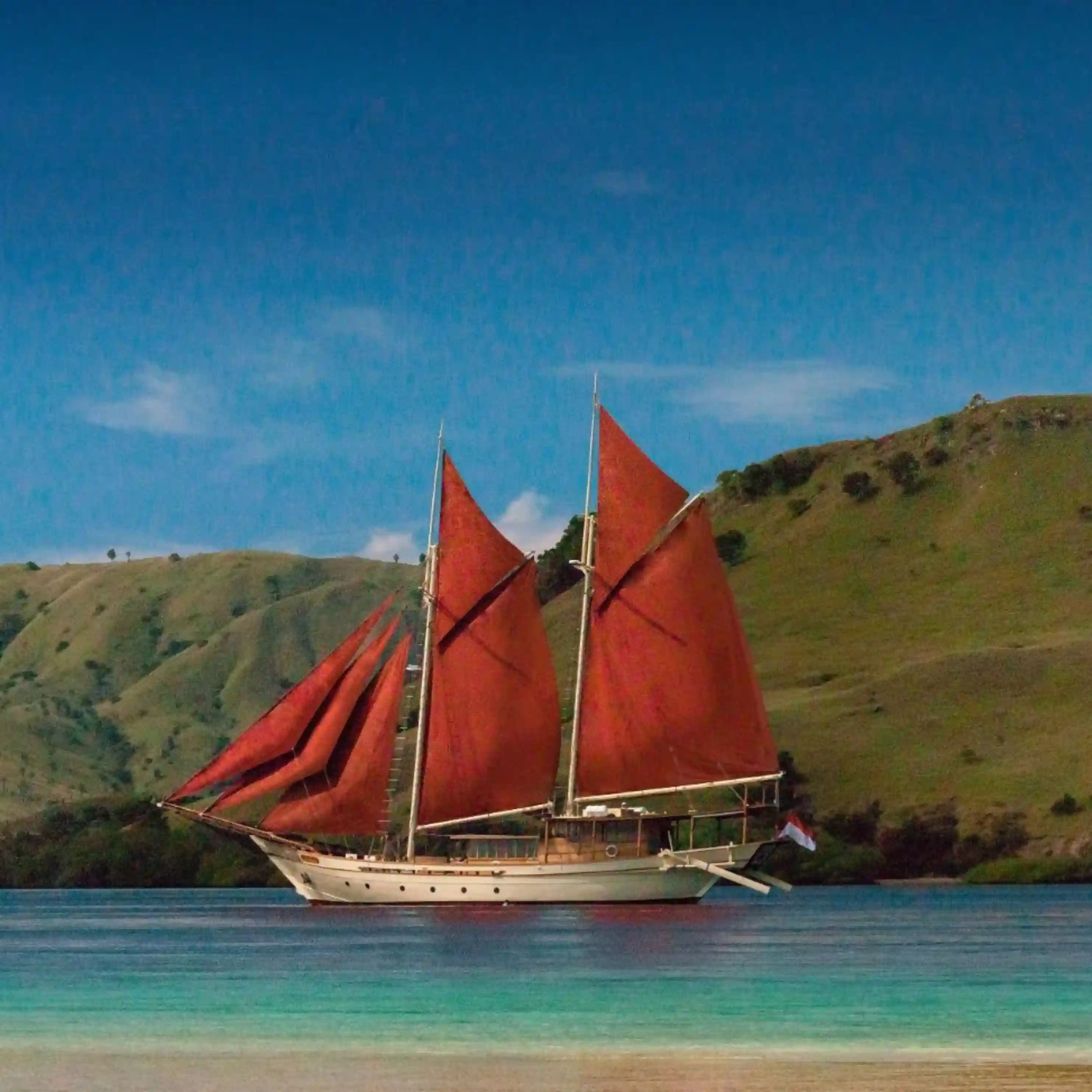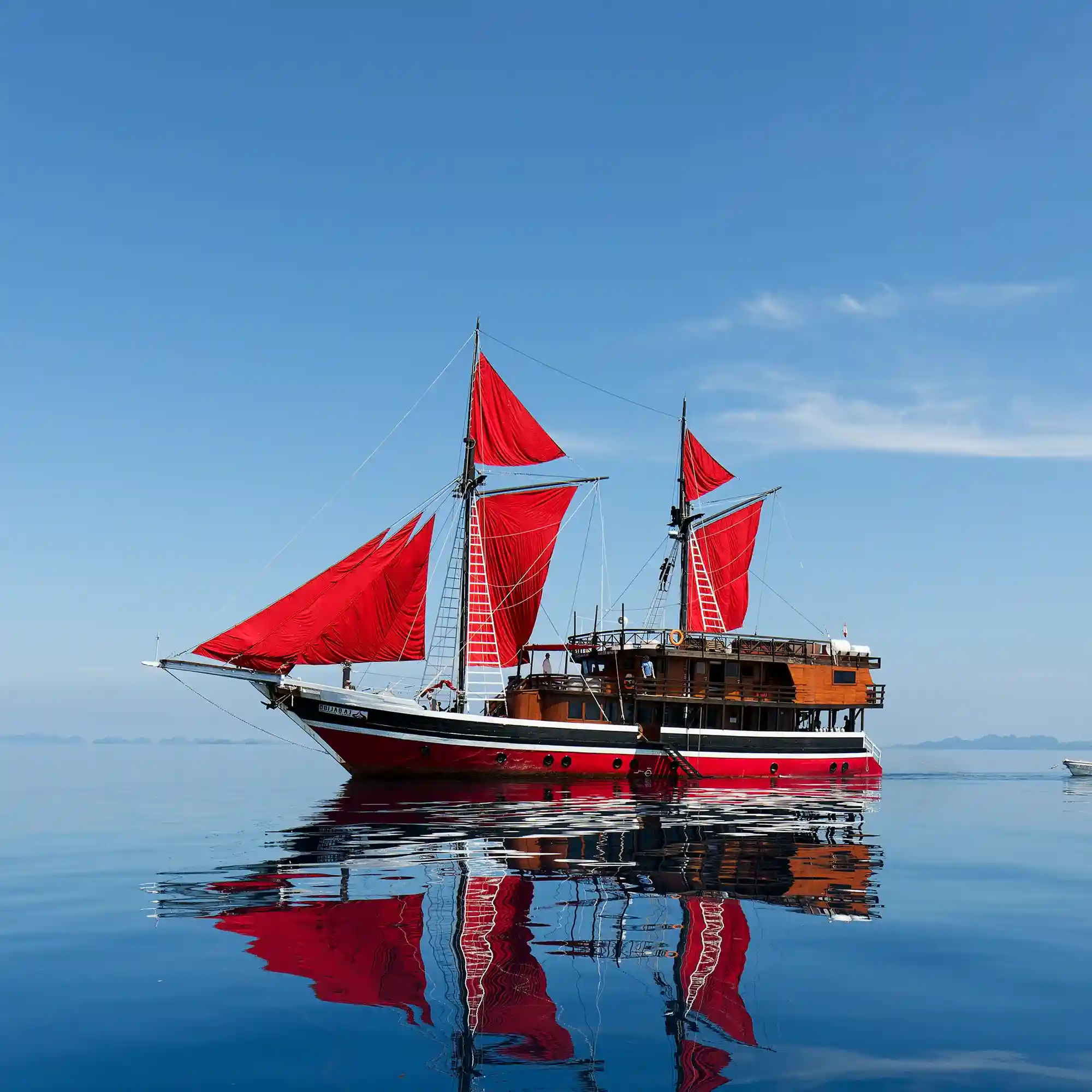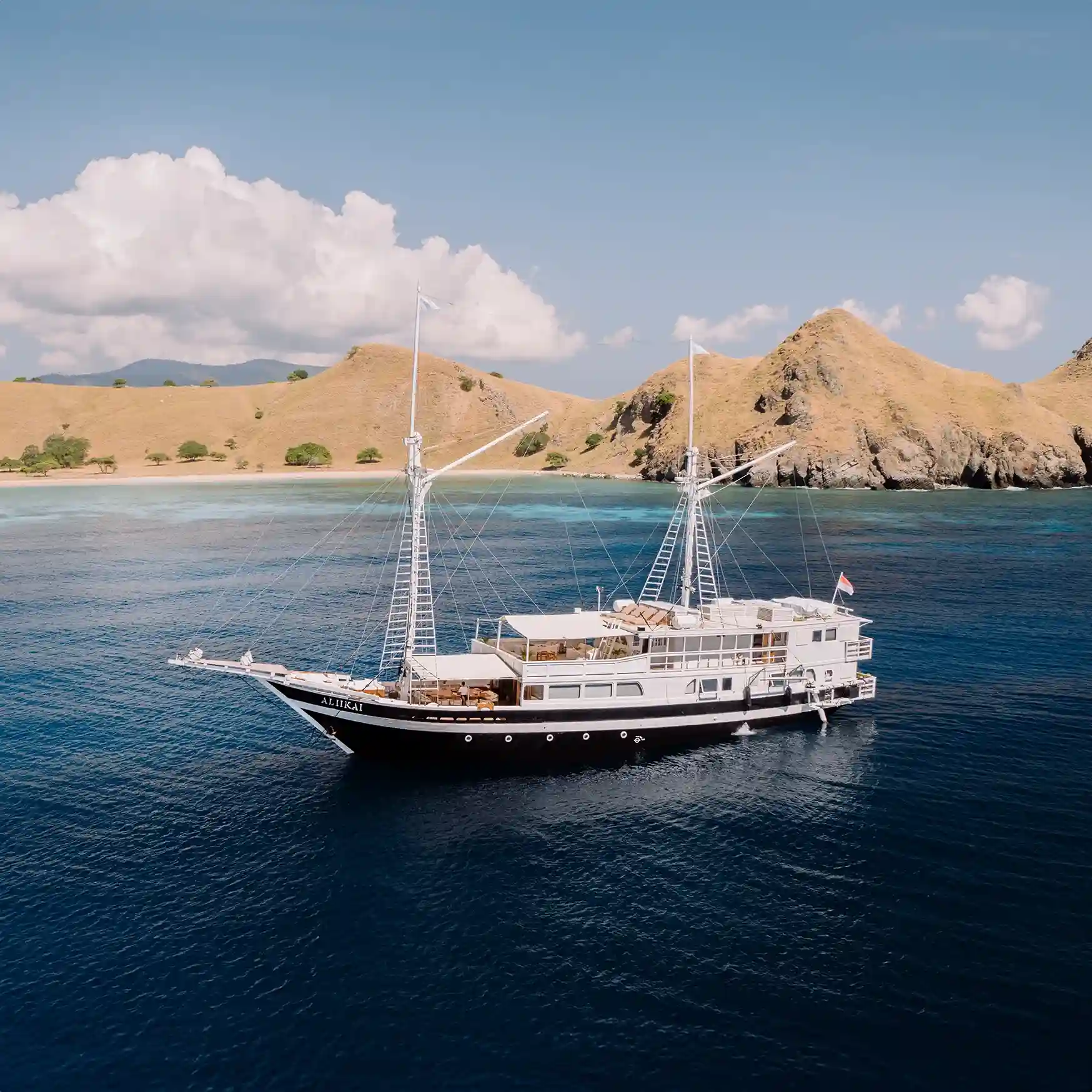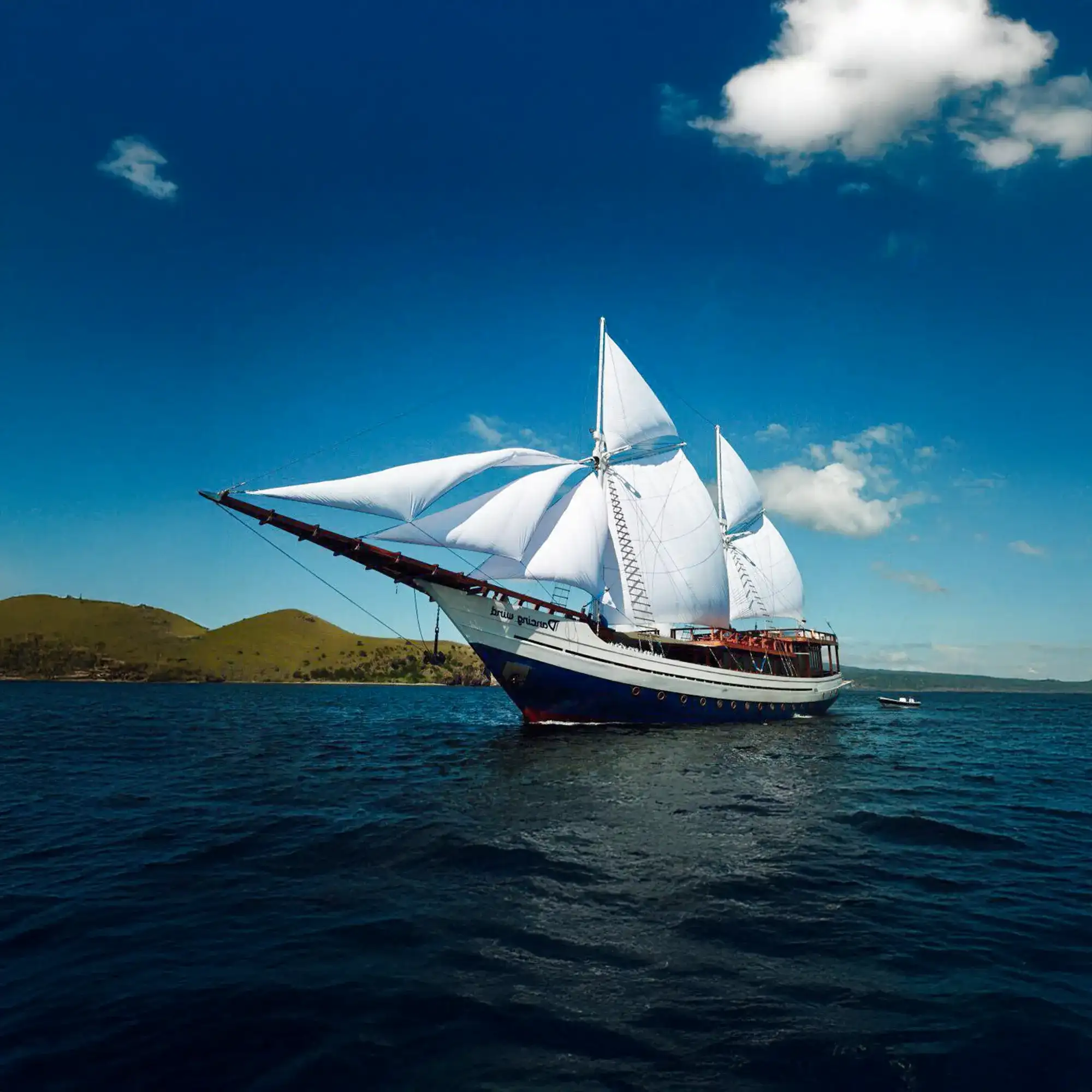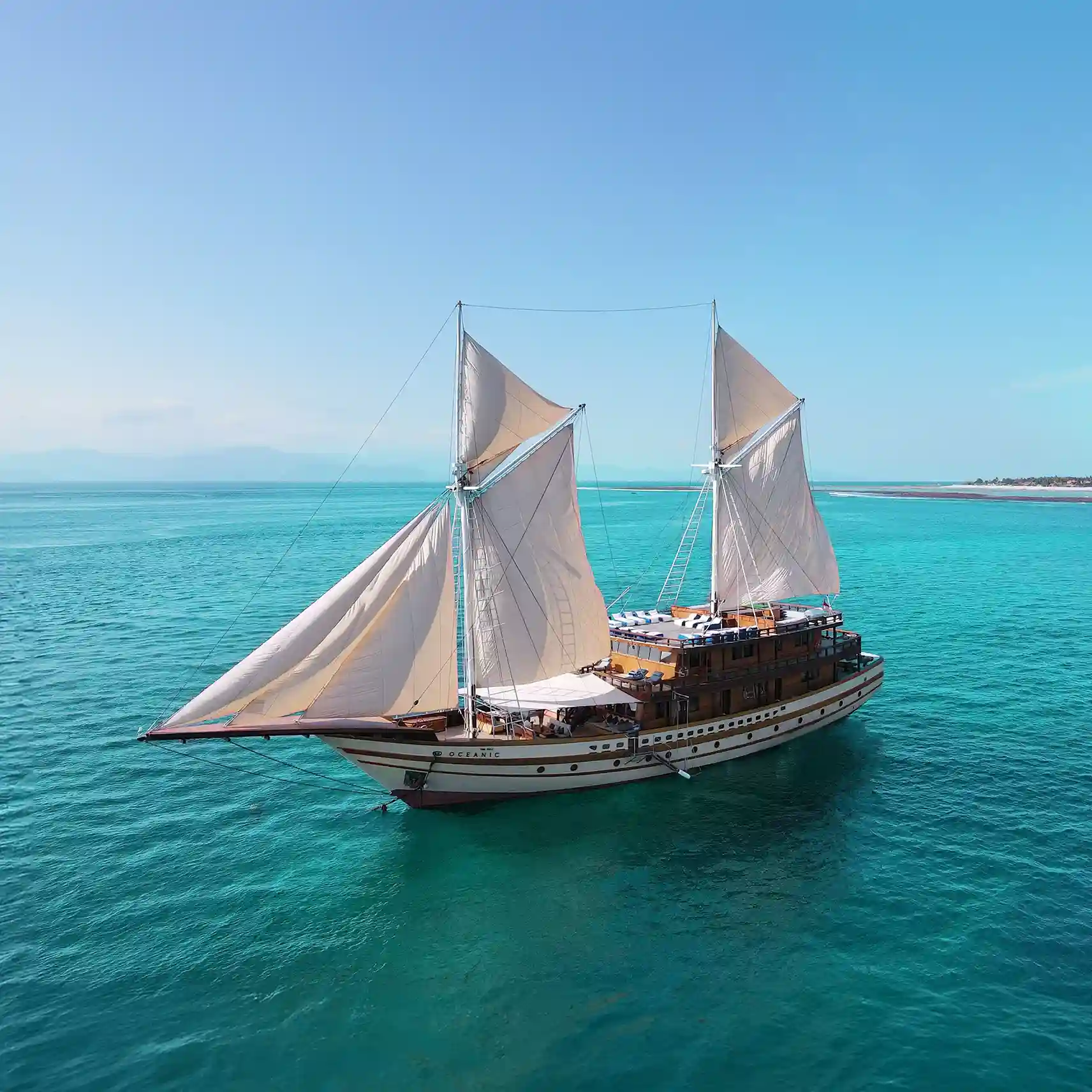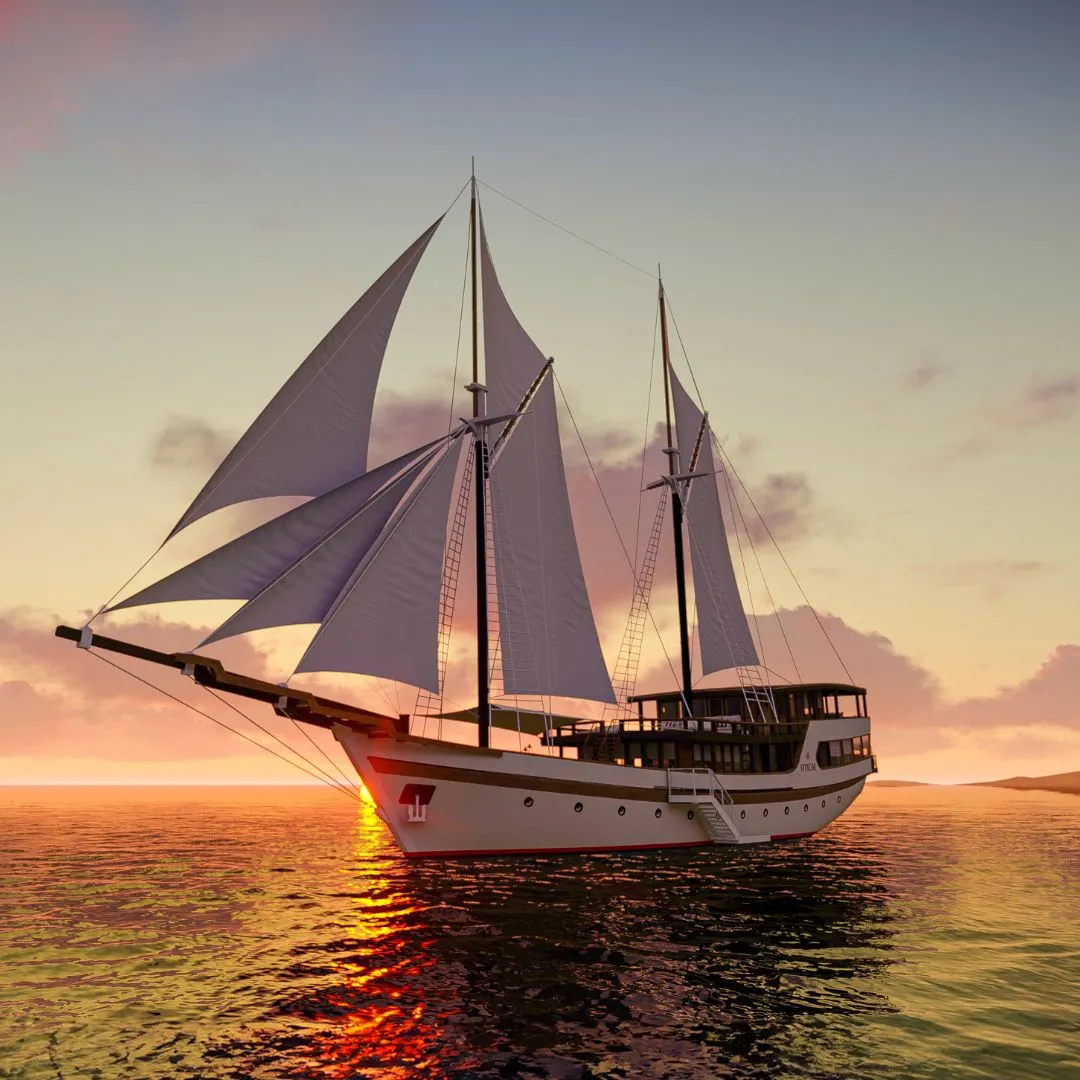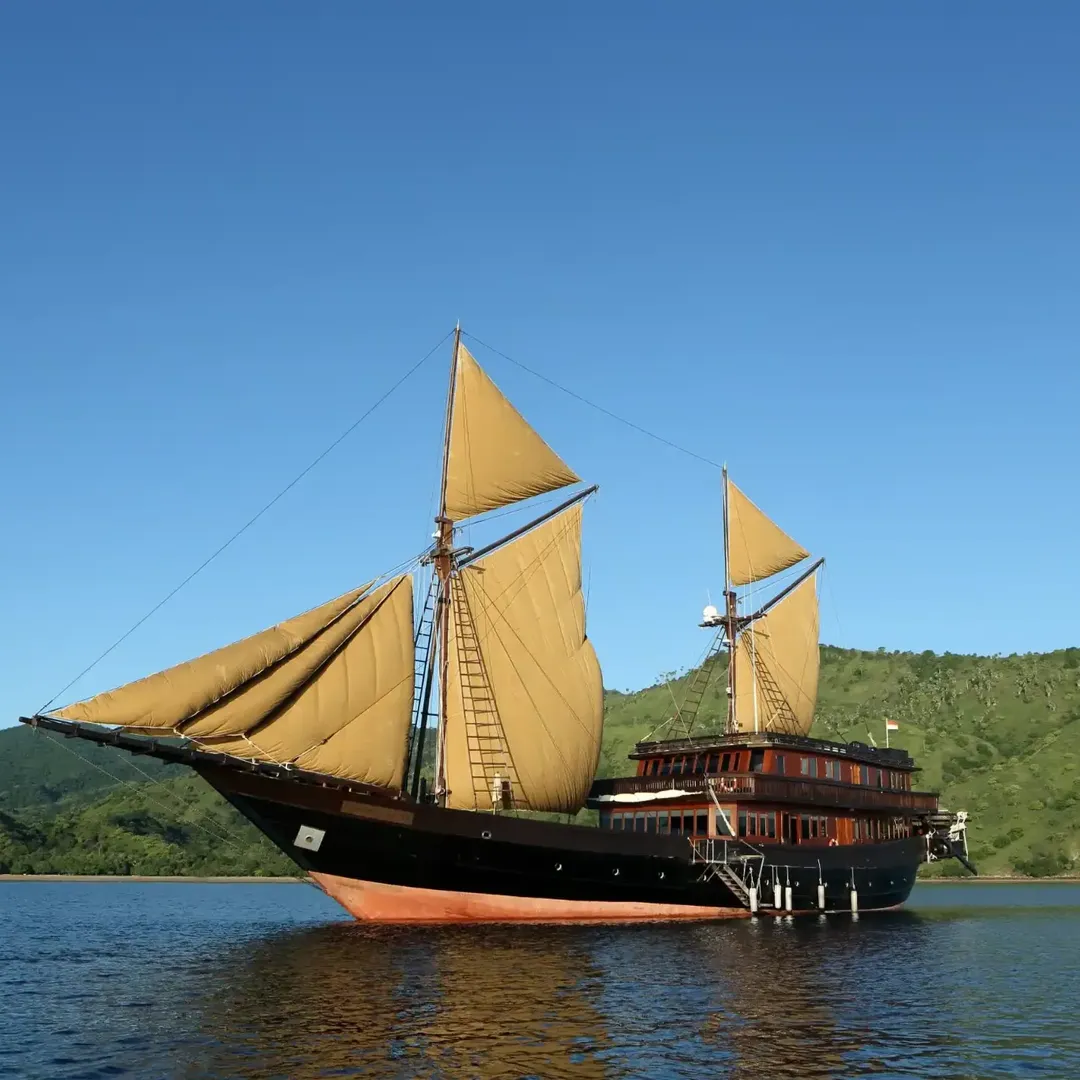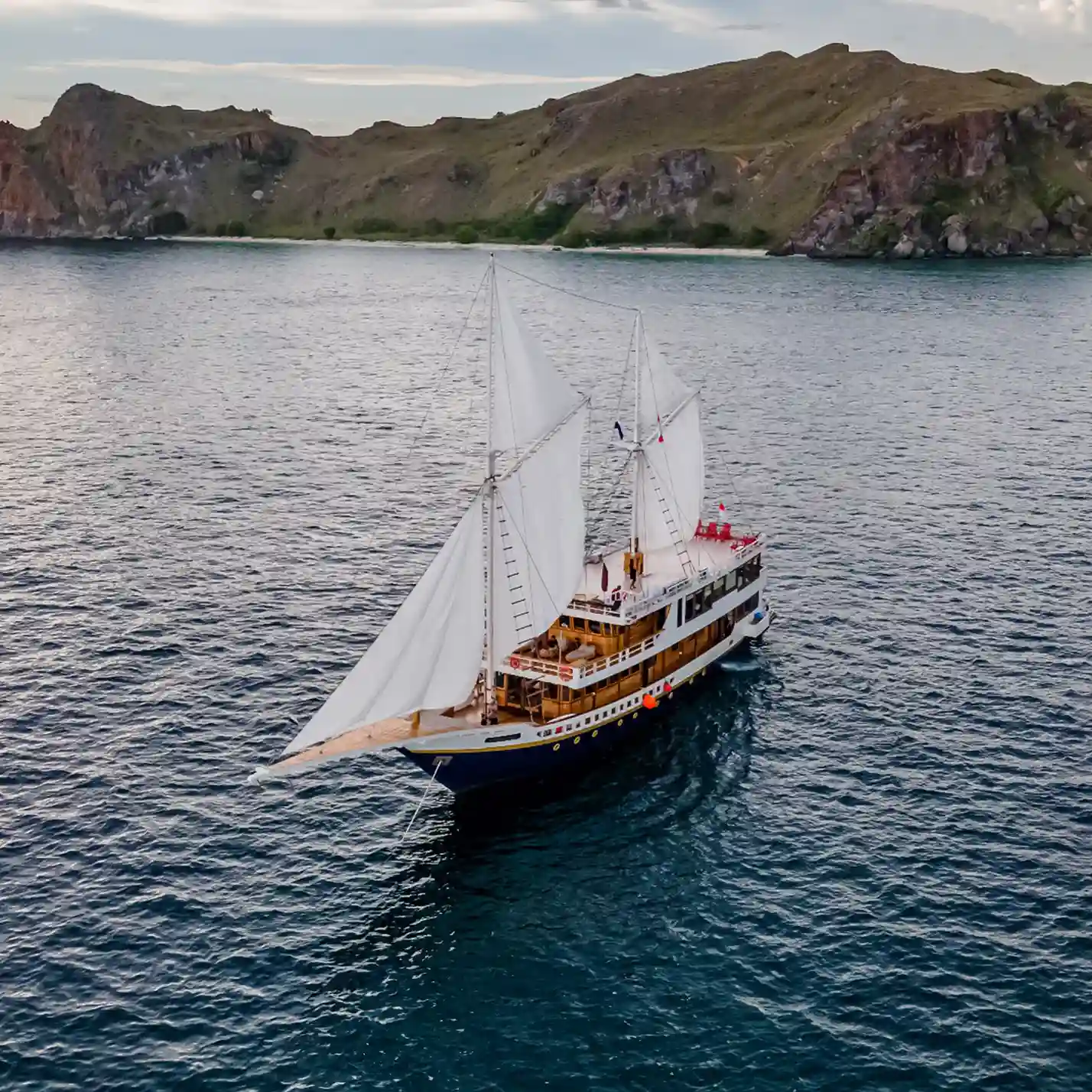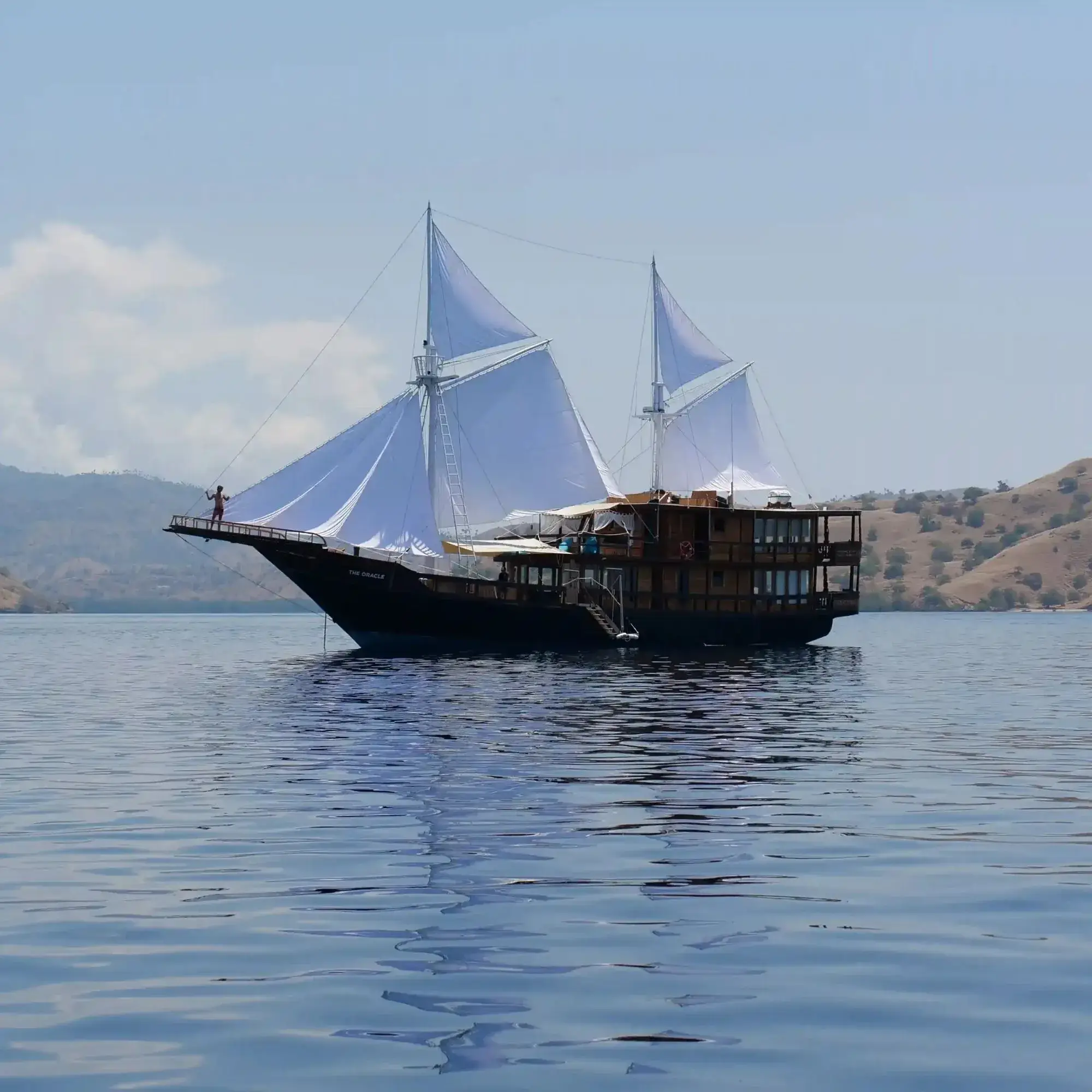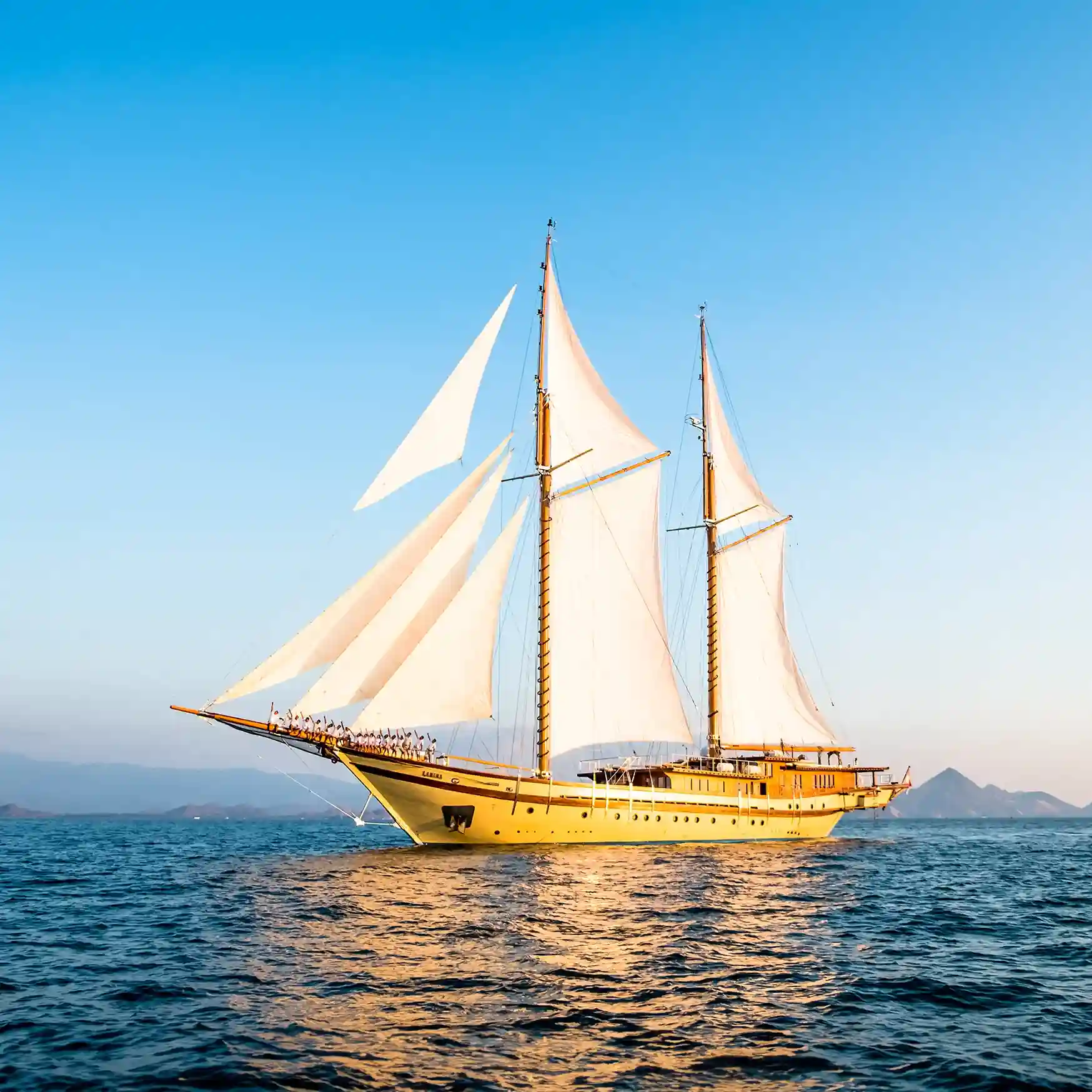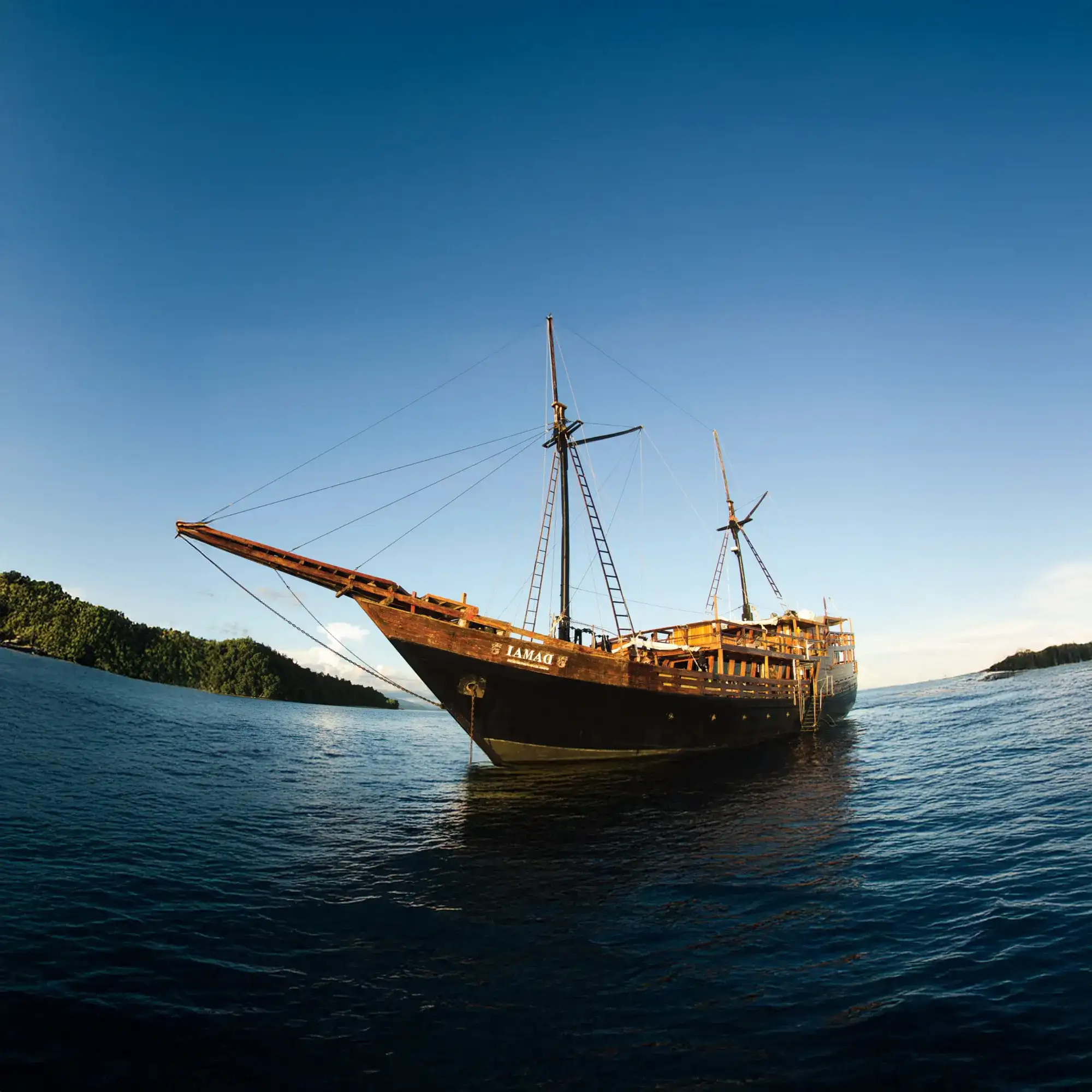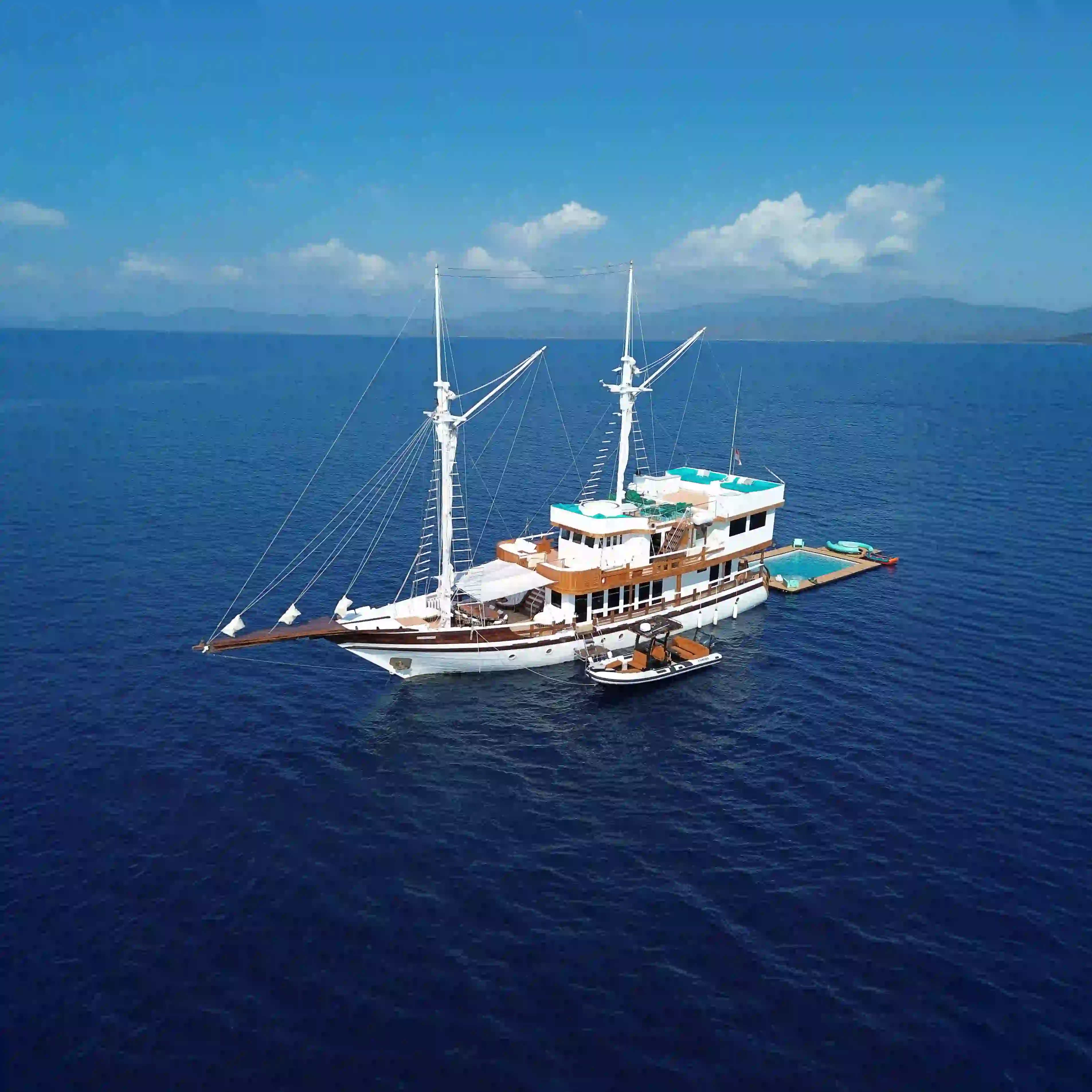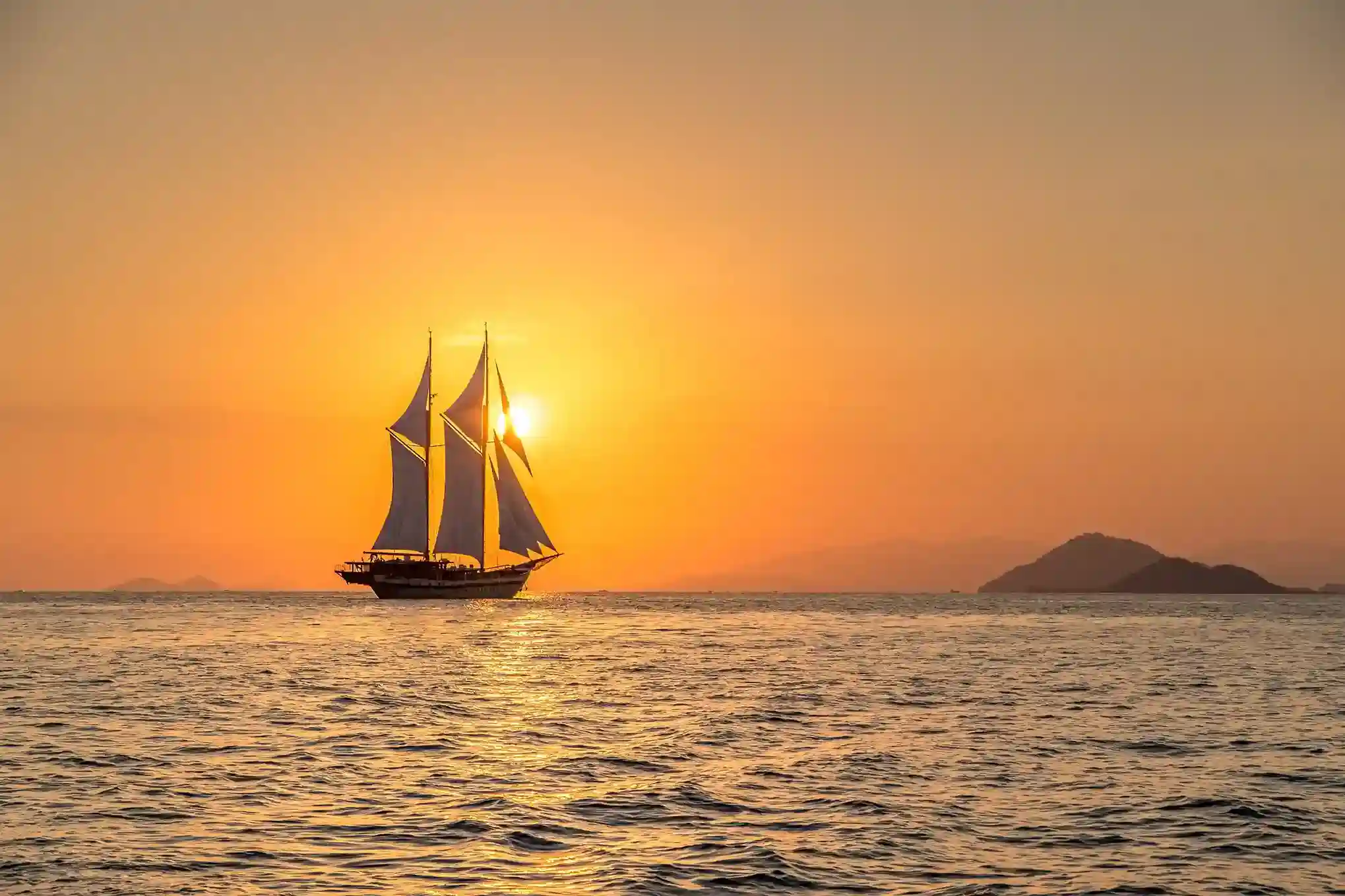
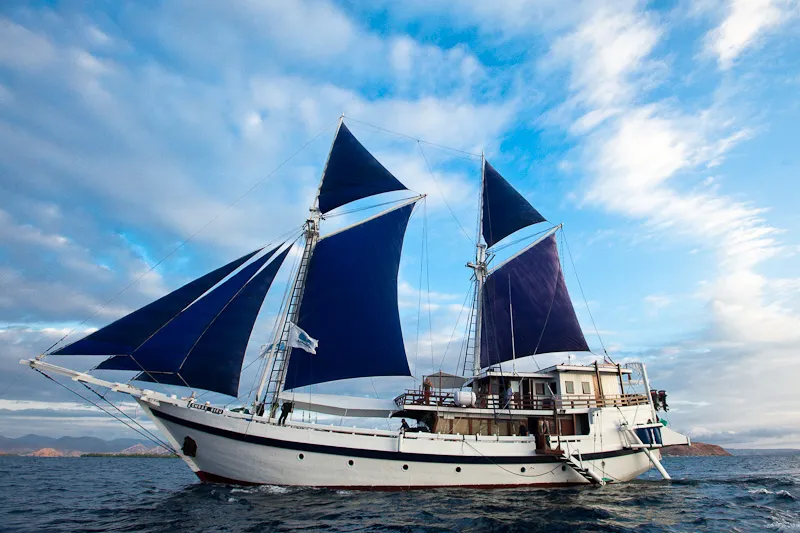
About Ombak Biru
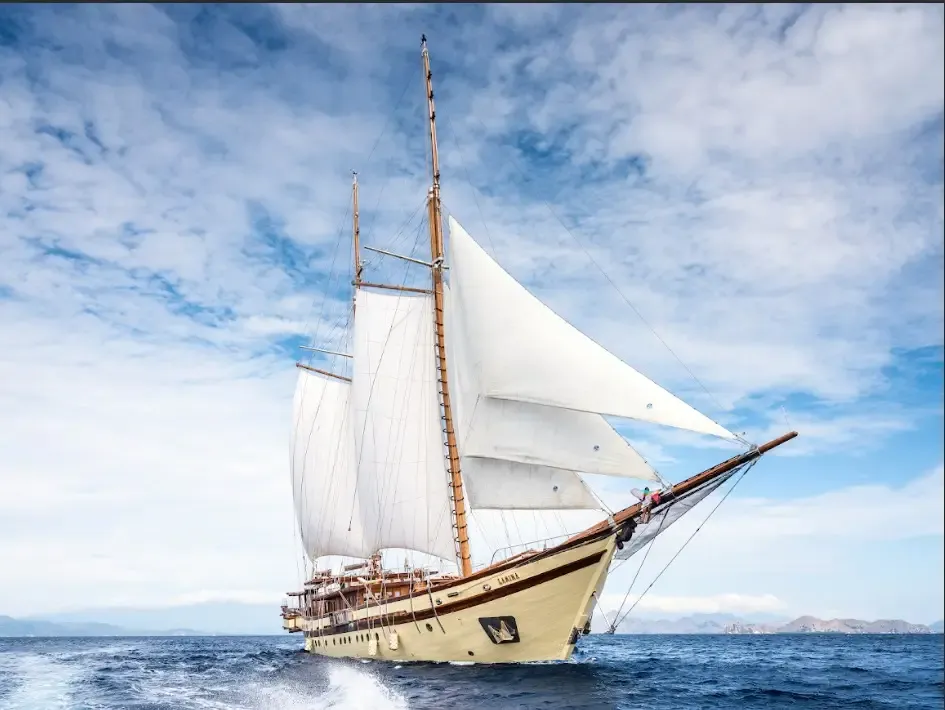
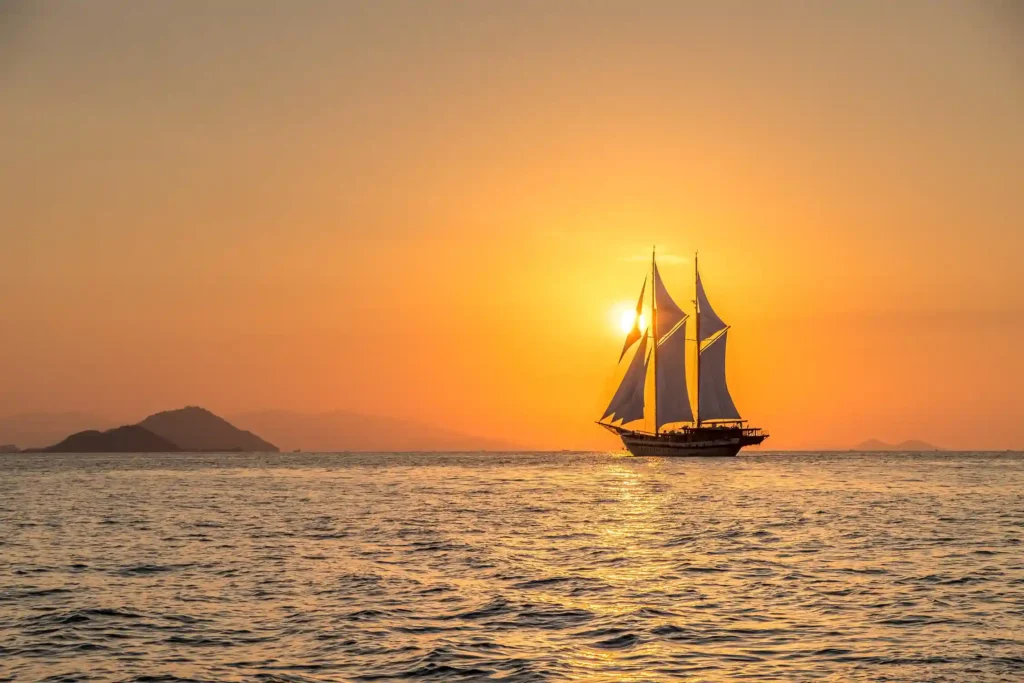
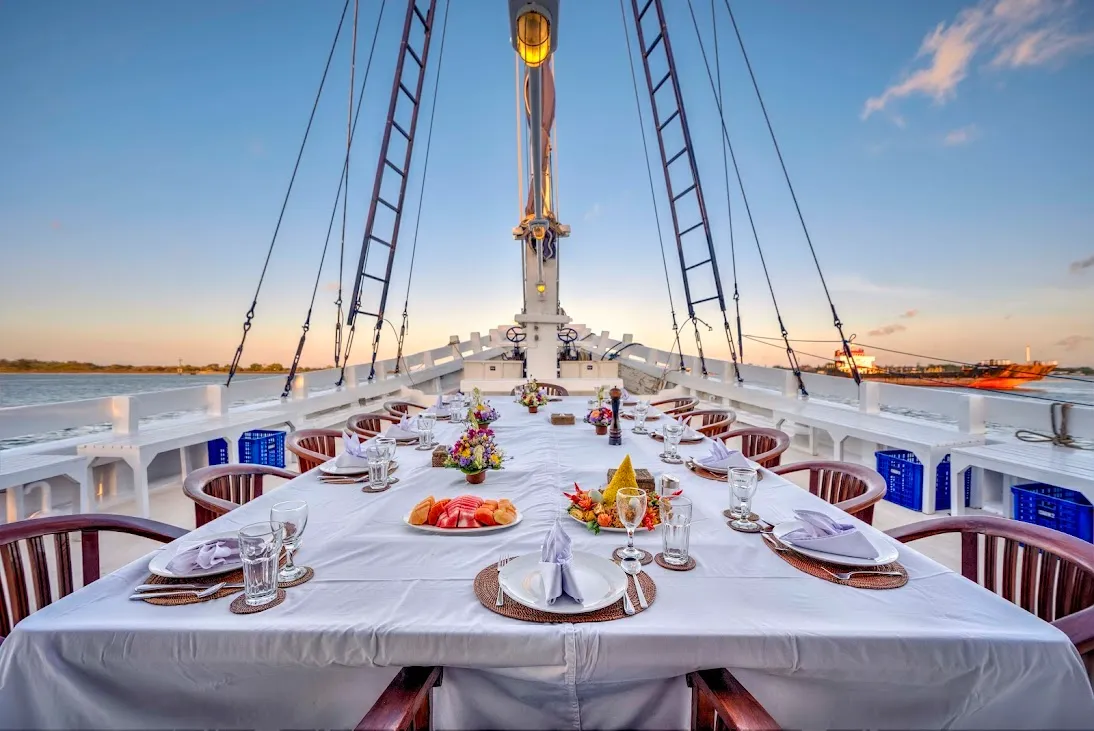
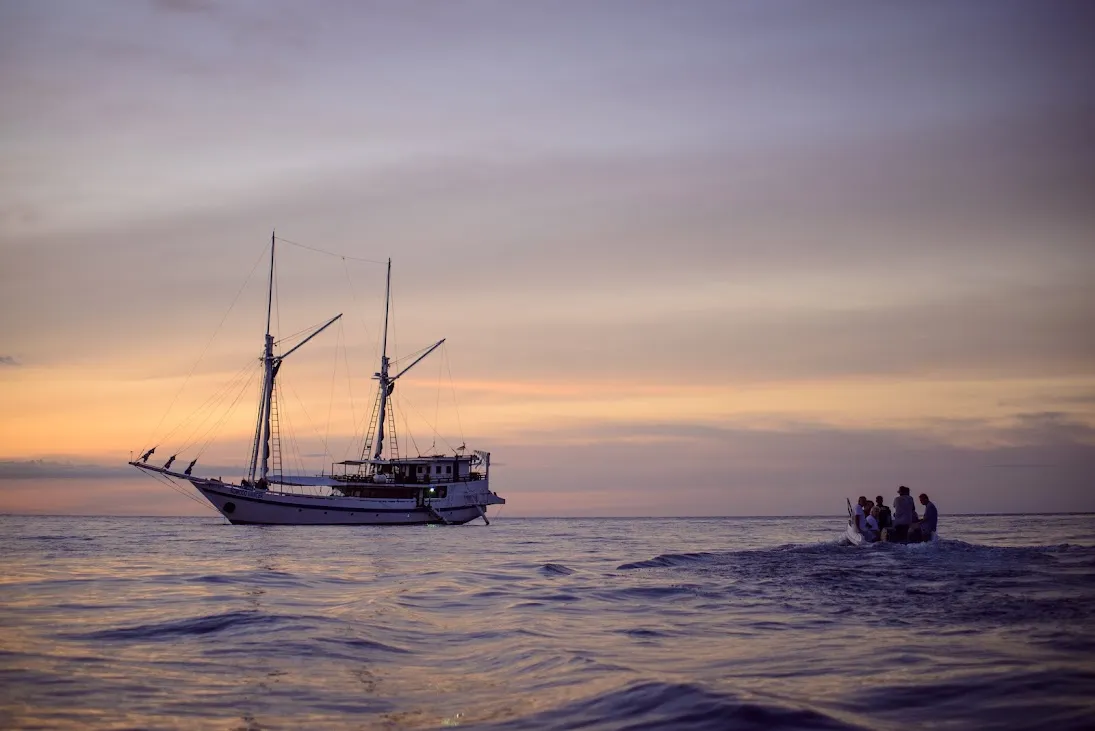
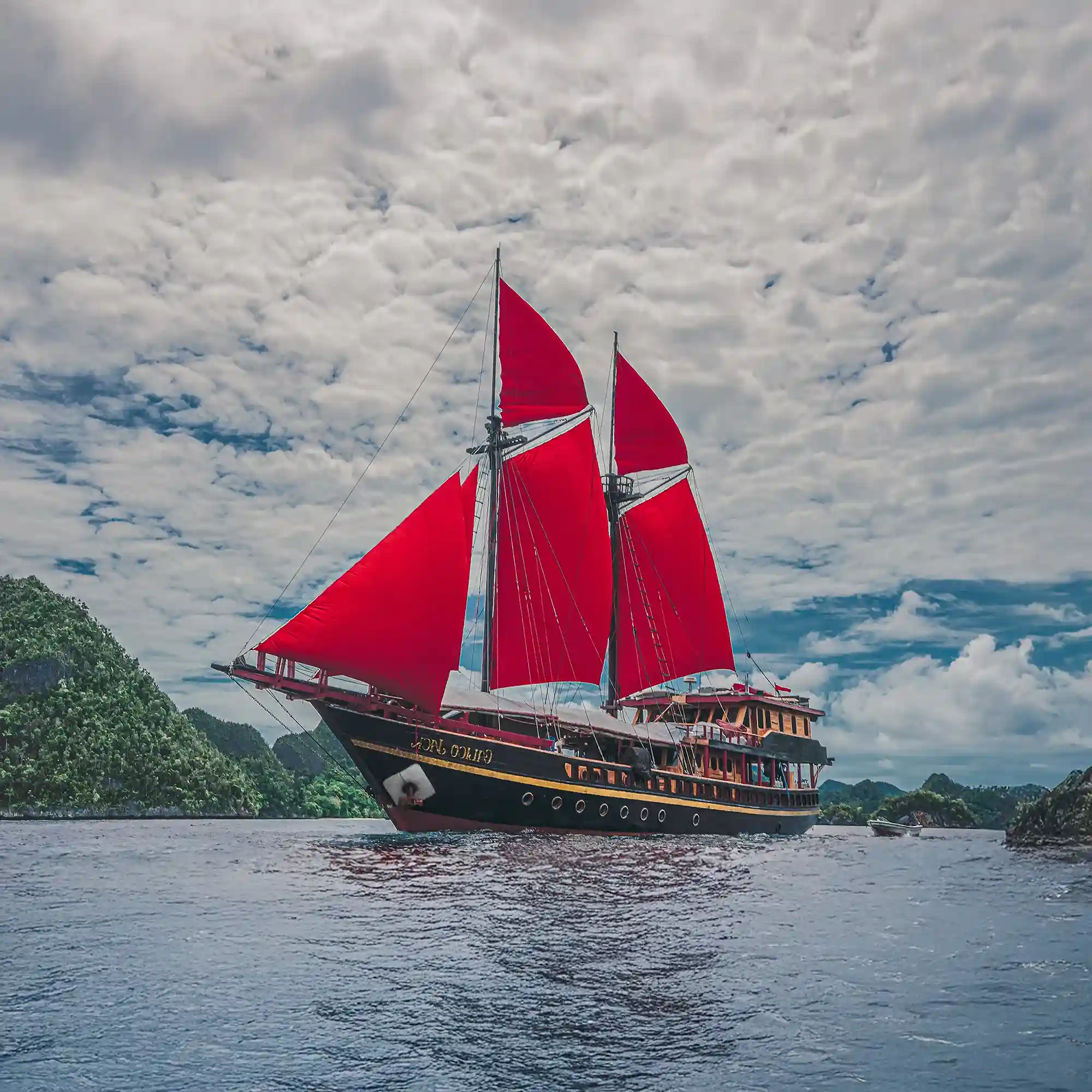
The first morning, I woke before sunrise to the quiet creak of teak and the soft slap of waves against the hull. I stepped barefoot onto the deck, wrapped in a thin blanket, and watched the sky over Wayag begin to glow pink behind the karst towers. There was no rush, no crowd—just Ombak Biru, the water, and the slow unfurling of the day. Ombak Biru felt less like a vessel and more like a quiet observer in a world that hadn’t yet woken up.
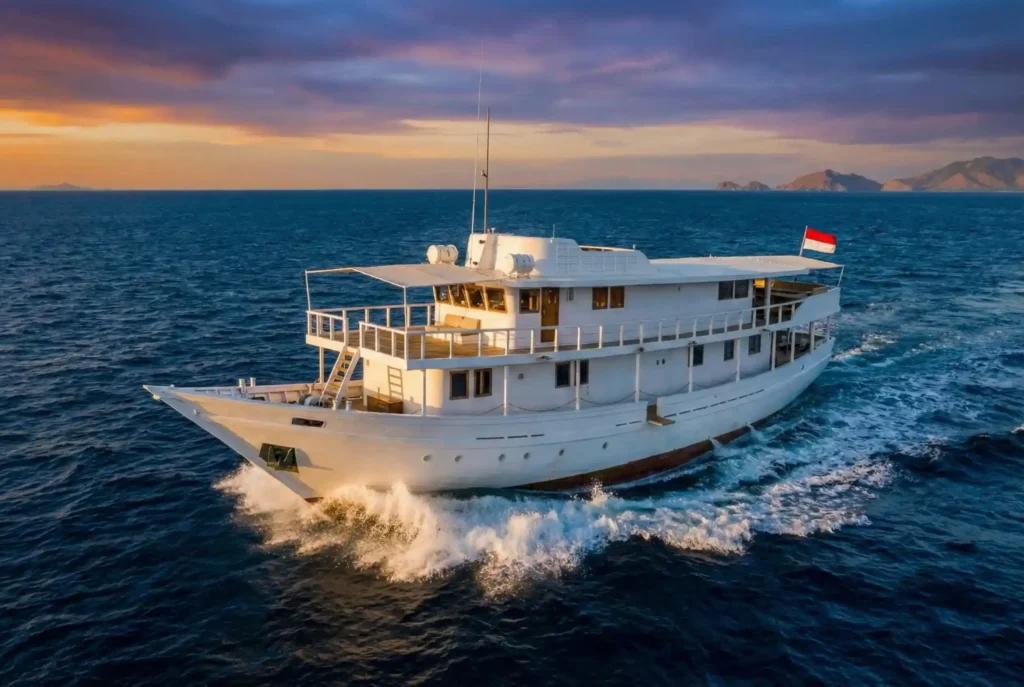
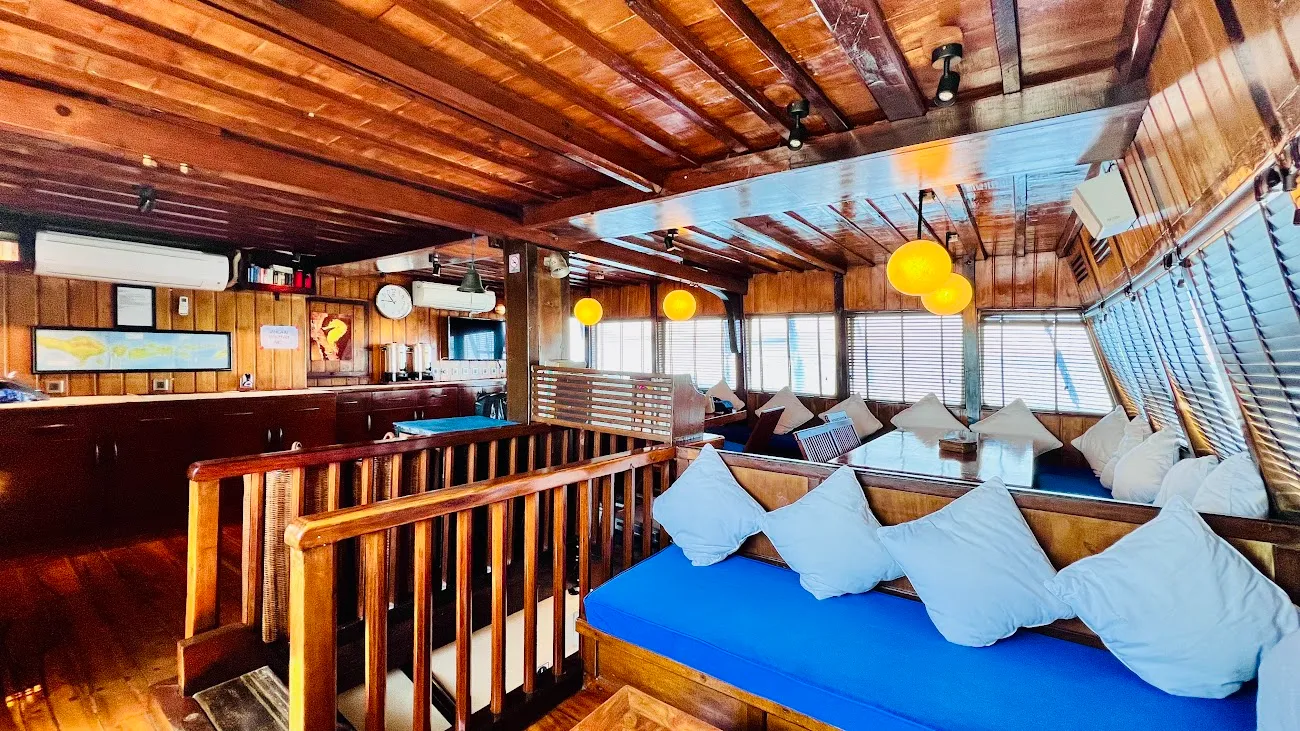
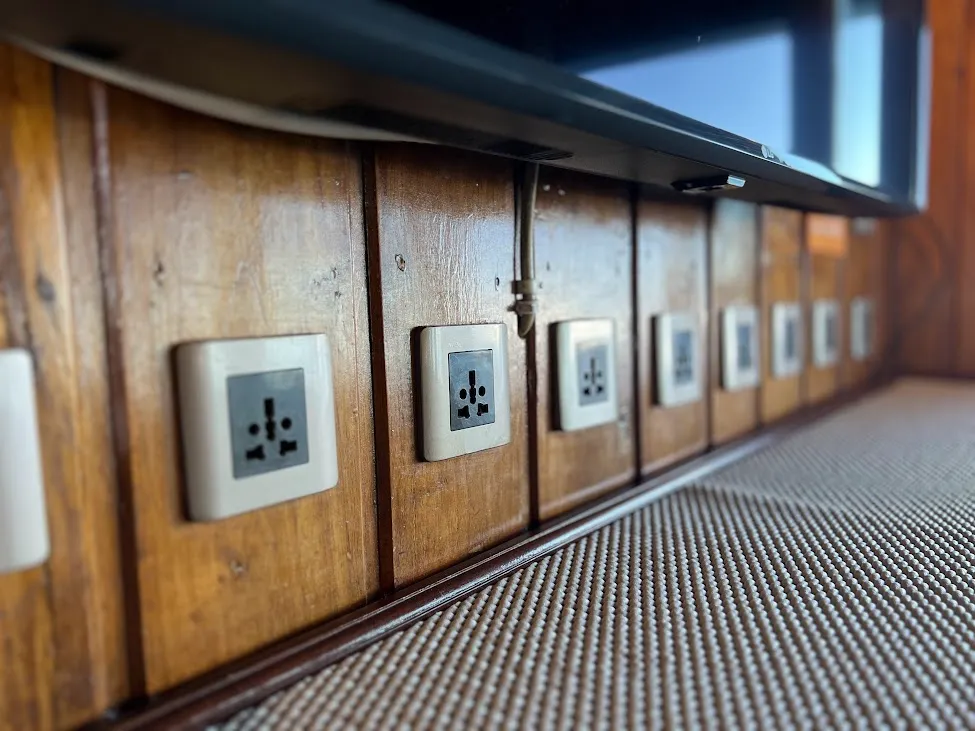
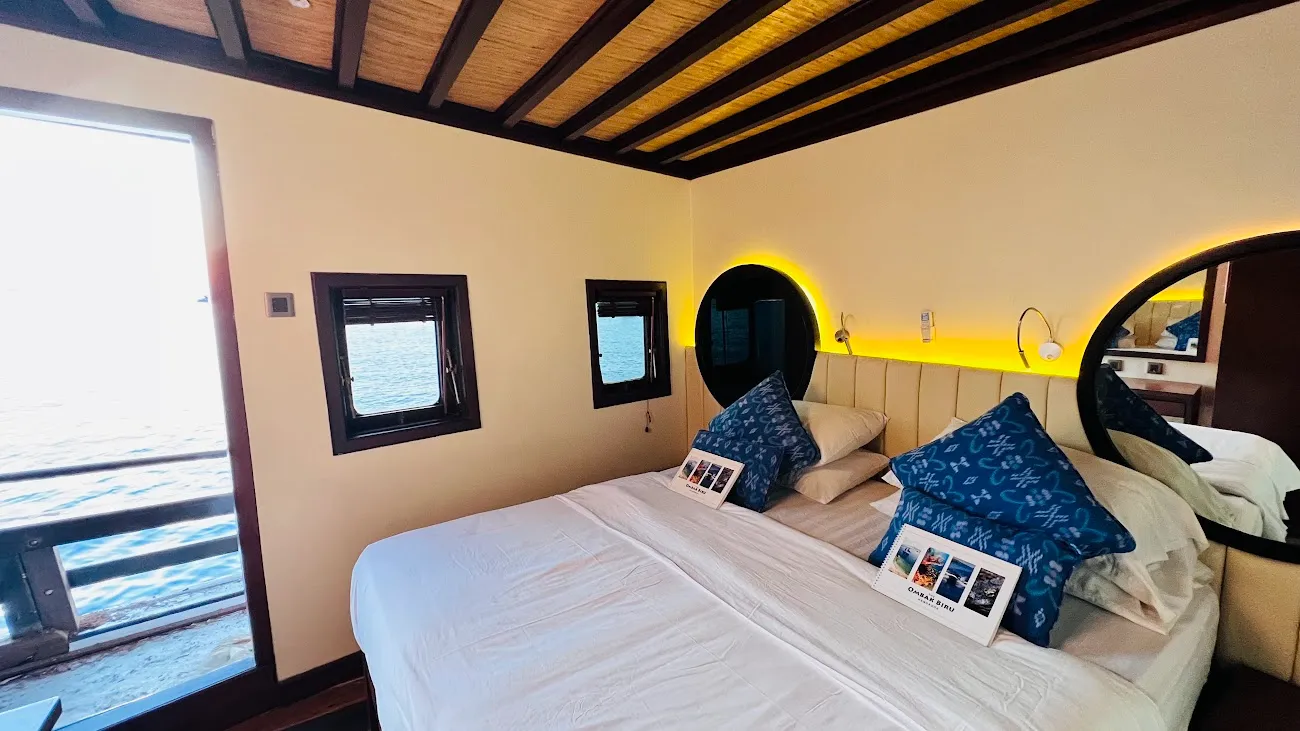
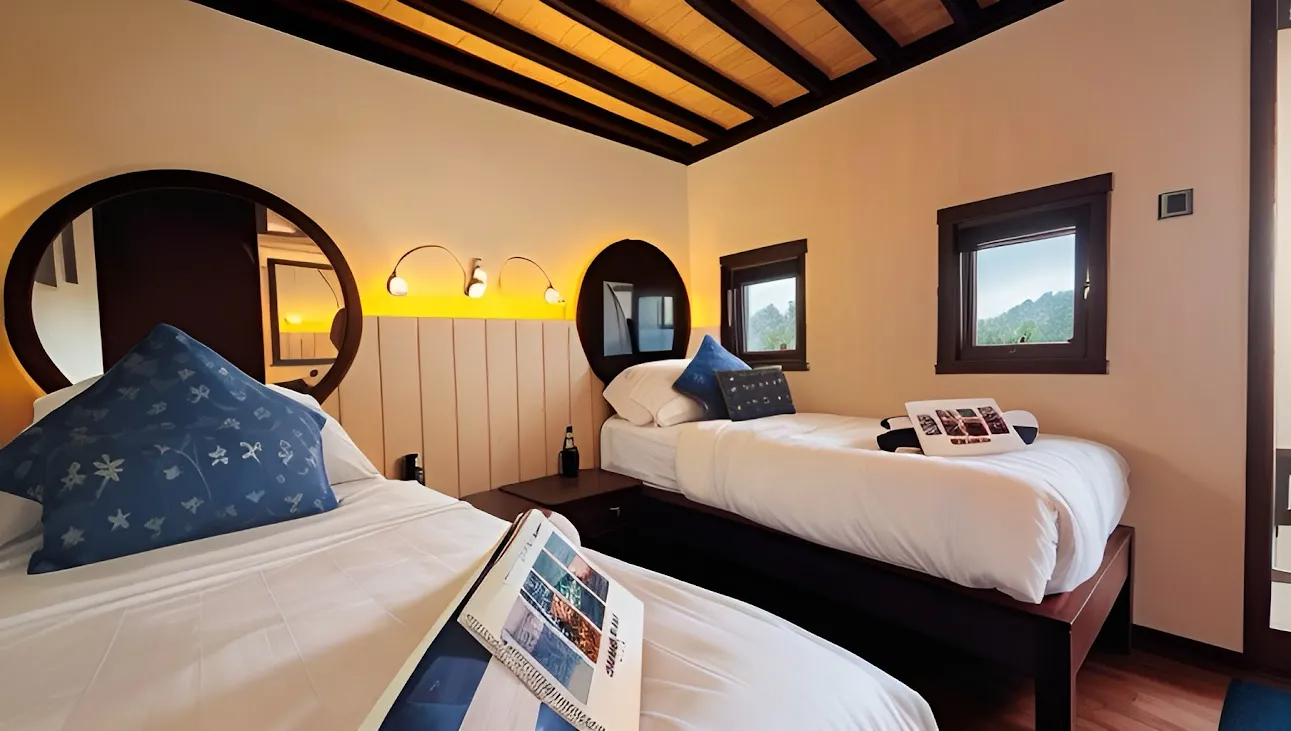
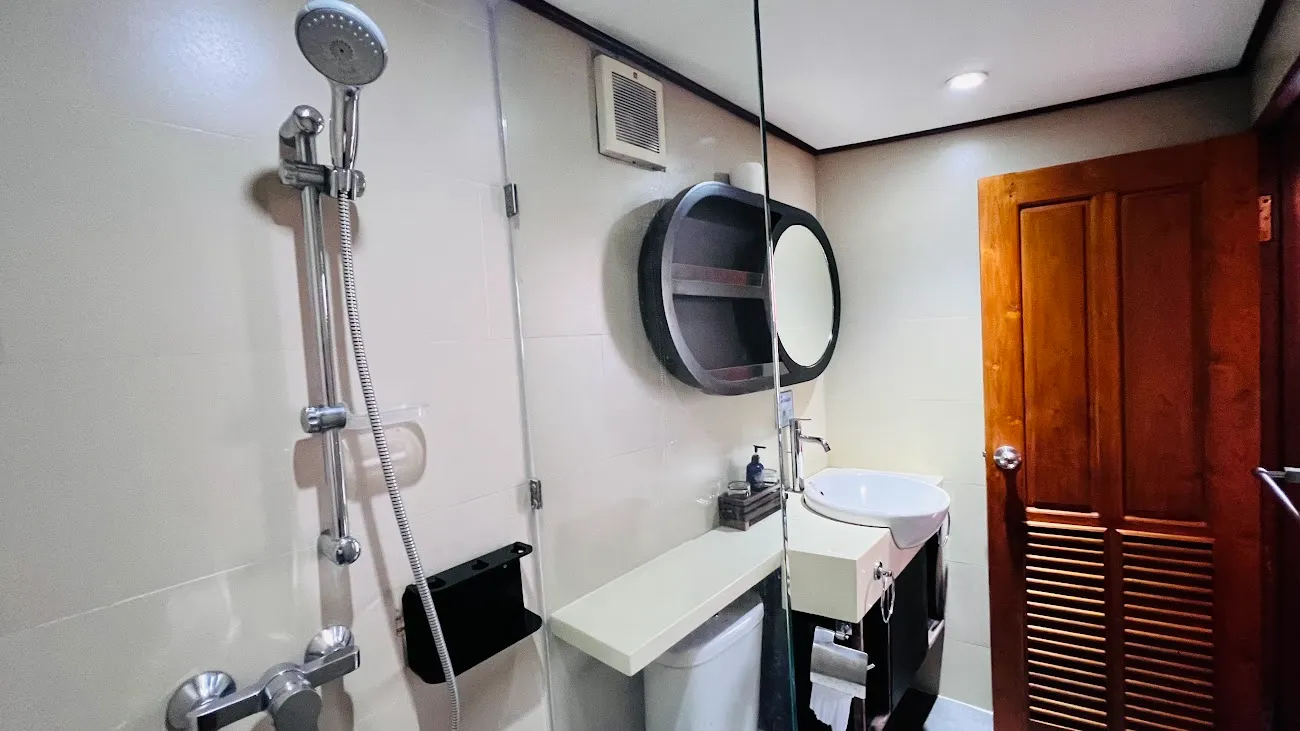
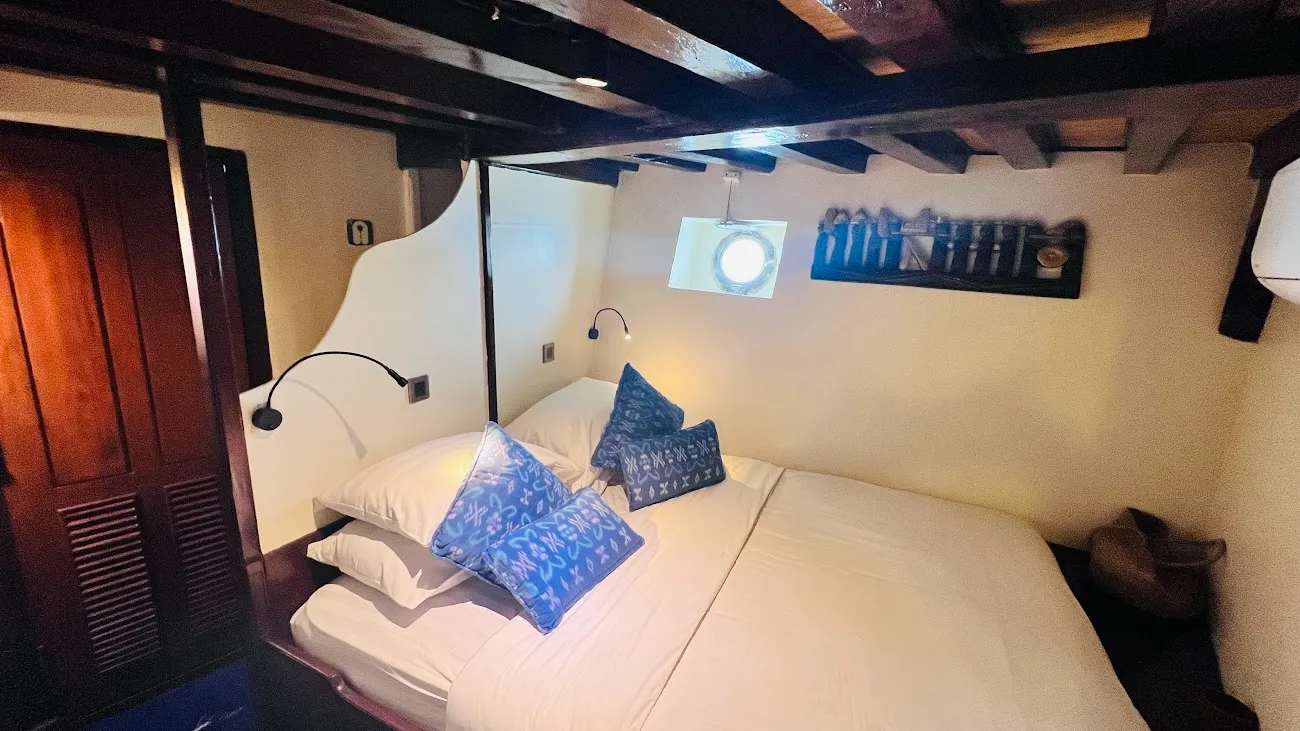
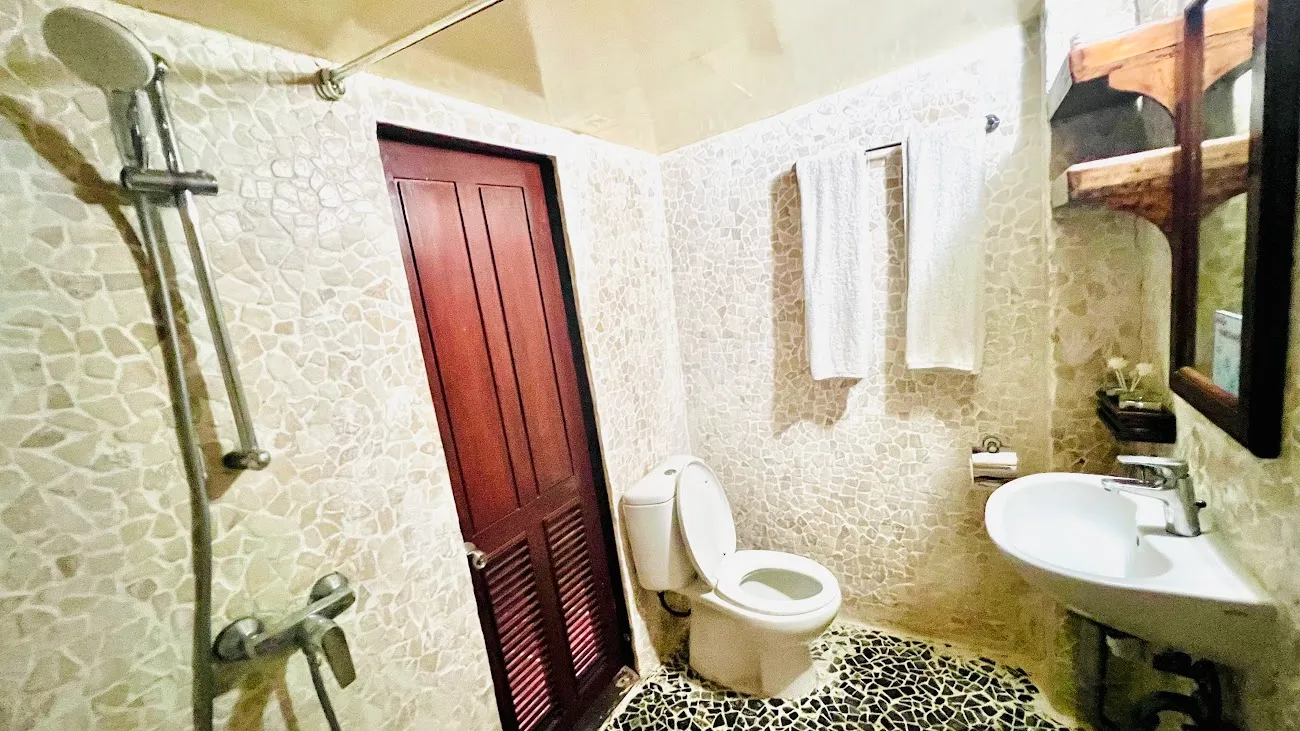
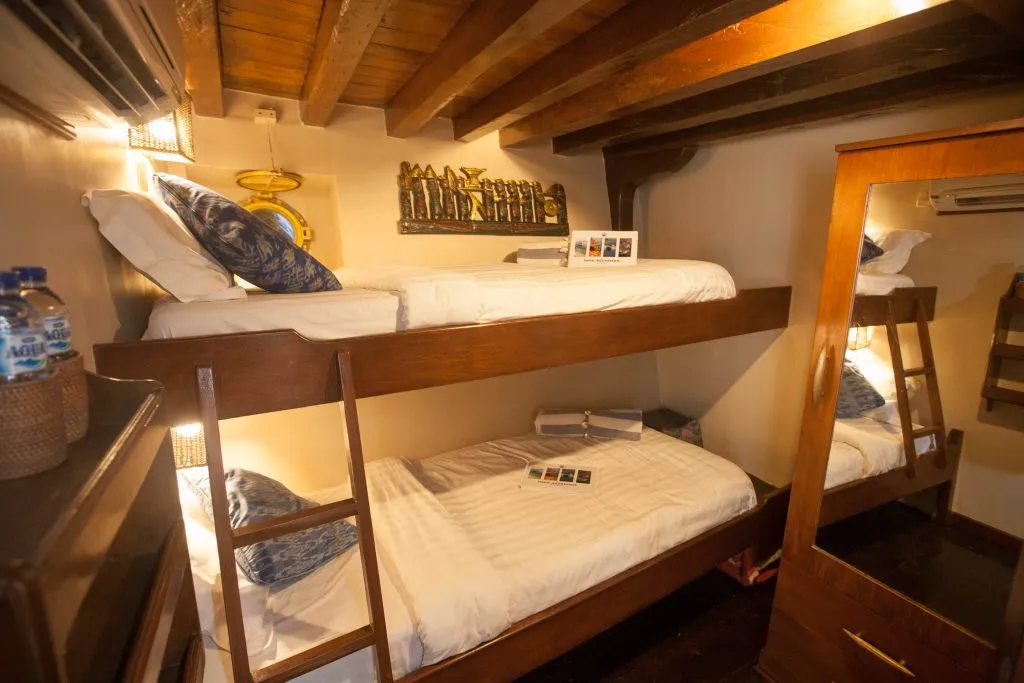
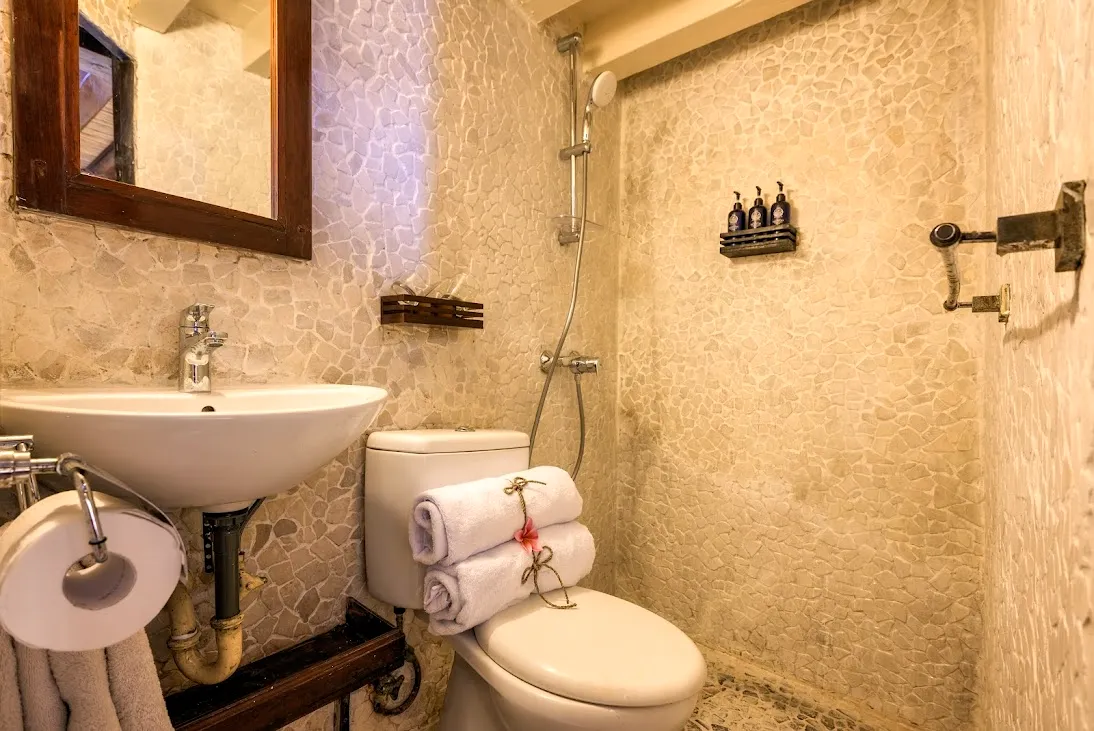
We’d boarded the night before in Sorong, after a short transfer from the airport. The crew—18 of them for just 16 guests—moved with quiet efficiency, helping with bags, offering cool towels and fresh lime water. I was shown to my cabin, one of eight, tucked into the lower deck. It was compact but cleverly designed: real wood finishes, a proper wardrobe, thick cotton sheets, and an ensuite with hot water that never quit. The AC hummed just enough to be noticed, then forgotten.
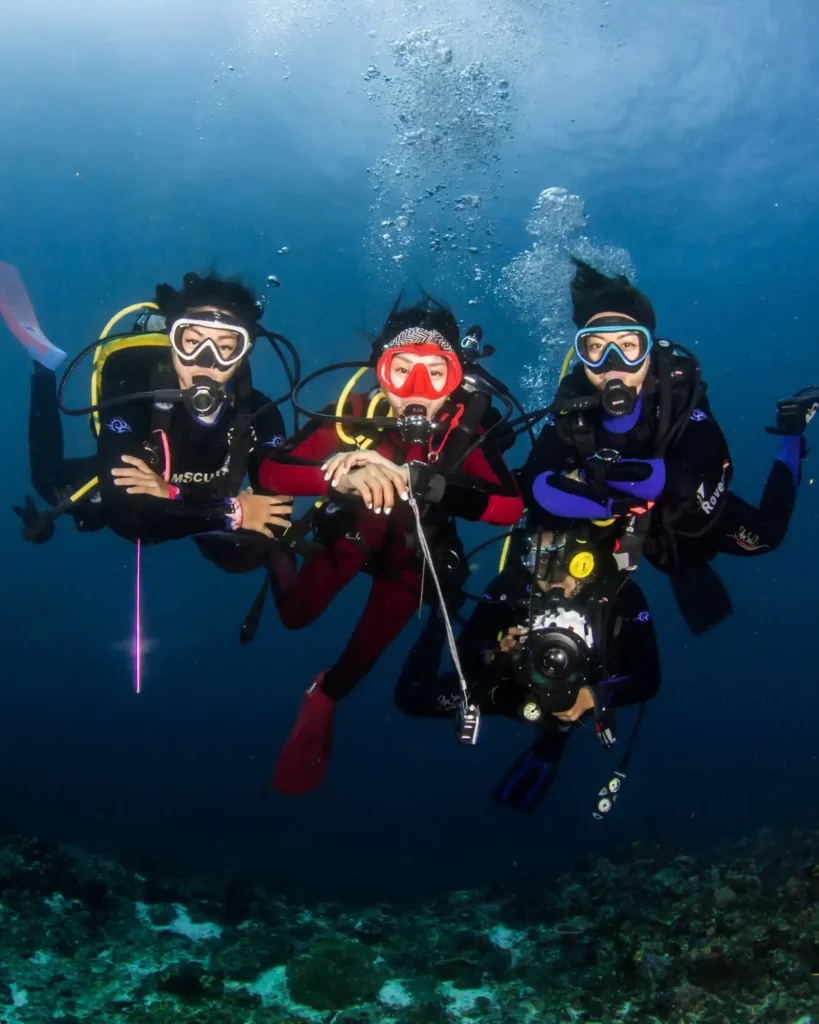
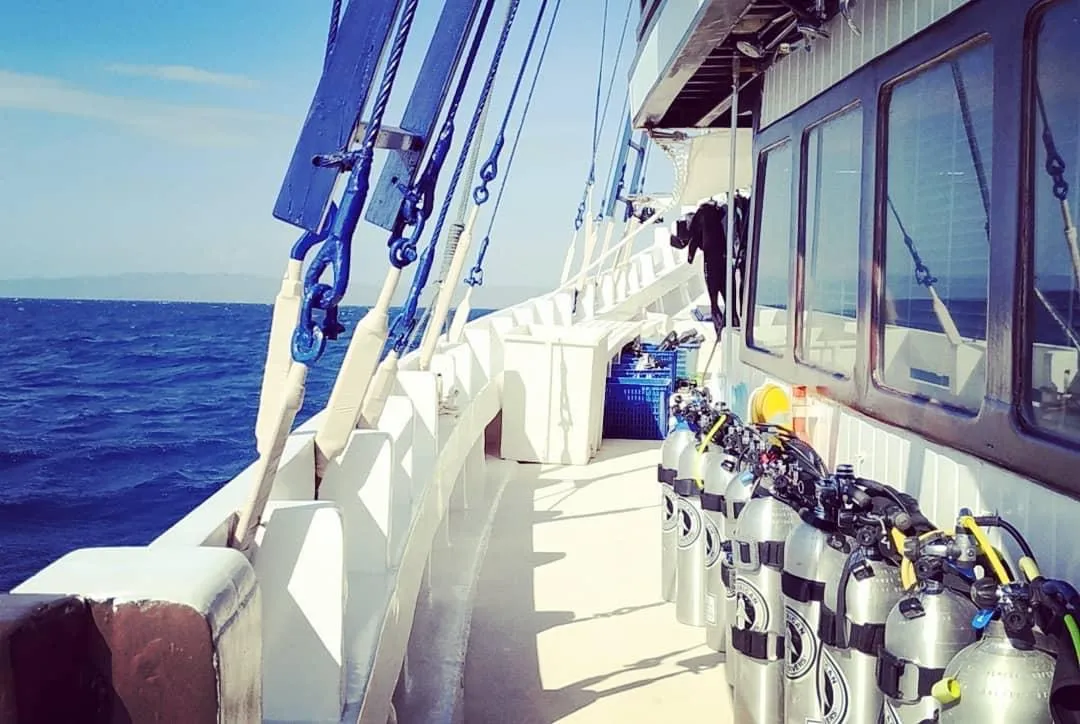
Our days unfolded with a rhythm that felt both planned and spontaneous. One morning, we anchored in the Dampier Strait, and by 6:30 we were in the water at Cape Kri. The current was strong, but the dive master gave a clear briefing with hand signals we all recognised. I drifted over coral walls so dense with fish they looked like moving fabric—barracuda, pygmy seahorses, wobbegongs curled in crevices. At night, we gathered on the upper deck. No loud music, just low conversation and the occasional burst of laughter. One evening, the captain pointed out constellations while we sipped clove tea.
On day two, we moved to Misool. The landscape shifted—smaller islands, turquoise lagoons, ancient rock art visible on cave walls above the tide line. We snorkeled at Nusa Laurem, where the coral was so healthy it felt artificial. The crew had lunch ready by the time we climbed back: grilled mahi-mahi, coconut rice, and sliced papaya. They remembered who drank coffee and who wanted decaf. One of the deckhands, Pak Wayan, told stories about crossing the Banda Sea during monsoon season, his hands tracing the motion of the waves.
The last dive was at Arborek Jetty. I hung at 5 meters, watching blue-ribbon eels sway in the current. A tasselled wobbegong glided under the pylons. Back on board, they handed out warm towels and fresh pineapple. No one was in a hurry to pack. Even on a 3-day trip, time expanded. We disembarked in Waisai the next morning, just after breakfast. The crew stood in a line, waving, and I realised I hadn’t checked my phone in 60 hours.